
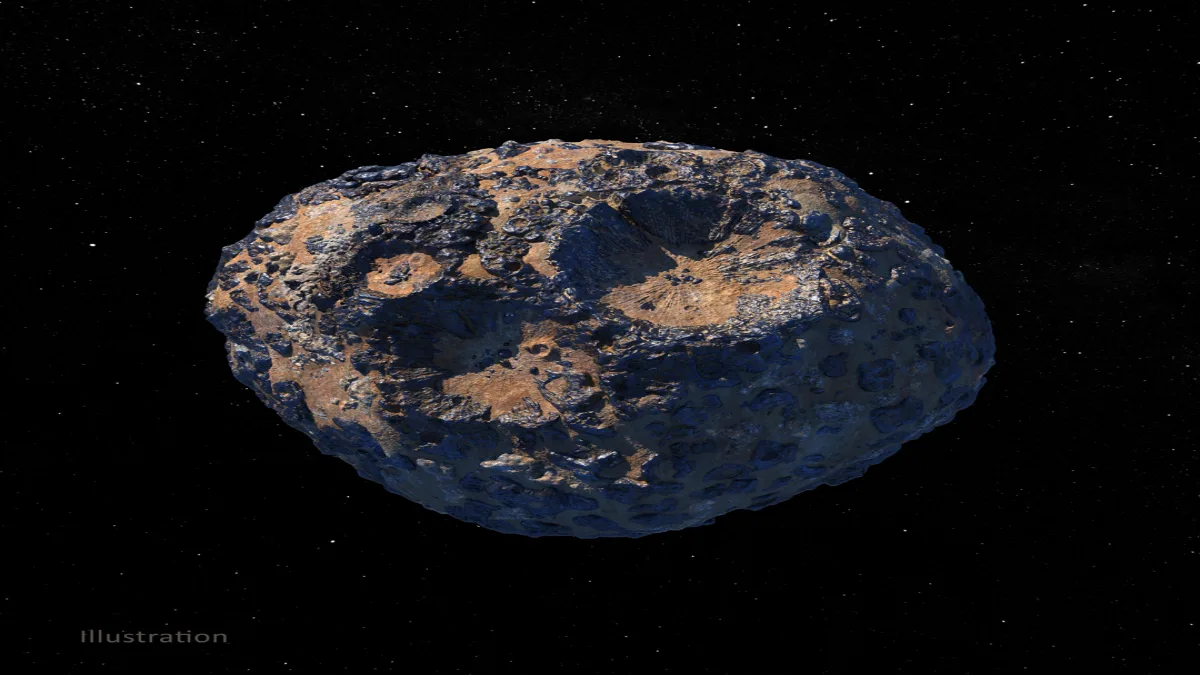
NASA asteroid defense setback is making headlines this week as officials confirm flaws in the agency’s planetary protection strategy. Despite earlier success with missions like DART, new findings reveal important gaps in NASA’s ability to detect and respond to large, fast-moving asteroids that could potentially collide with Earth.
The issue came to light following a simulation run by NASA’s Jet Propulsion Laboratory, which showed that current systems could miss or misjudge asteroid threats if the objects approach from low-reflective or high-velocity angles. As planetary defense becomes more urgent, NASA’s delay in upgrading detection and response tools has sparked international dialogue.
Detection Issues Behind NASA Asteroid Defense Setback
According to NASA experts, many Near-Earth Objects (NEOs) still go undetected due to limited infrared visibility and blind spots caused by solar glare. The NASA asteroid defense setback is especially concerning in scenarios where warning time could be less than six months.
💫NASA's experimental asteroid deflection mission slammed its spacecraft into the asteroid Dimorphos in 2022.
The impact not only changed the asteroid's orbit, it unleashed a mass of boulders moving 3 times the momentum of the spacecraft.
This factor changes the difficulty… pic.twitter.com/24LUgy0JDs
— StarsAndScopes (@StarsAndScopes) July 8, 2025
“We successfully deflected a small asteroid in 2022. But when it comes to a 500-meter-wide impactor, our current tools may not be enough,” said Dr. Helena Moore, an astrophysicist working on NASA’s NEO tracking program.
While NASA’s DART mission proved kinetic impactors can shift small asteroid trajectories, this success doesn’t scale easily to larger, faster objects without years of planning, coordination, and multiple spacecraft.
Global Response to NASA Asteroid Defense Setback
The NASA asteroid defense setback has prompted renewed interest from international space agencies. ESA, ISRO, and JAXA have announced plans to revisit their joint strategies for planetary defense, including early asteroid mapping and shared launch contingencies.
NASA is also evaluating alternative technologies such as gravitational tractors, laser pulse deflection, and magnetic disruption systems. However, all these ideas remain in the early development phase.
“Asteroid impacts are preventable but only if we act early,” said James Wong, director of Planetary Risk at the United Nations Office for Outer Space Affairs. “We must treat space threats like climate threats: with global urgency.”
What This Means for Earth’s Safety
In the worst-case scenario, a large asteroid impact could trigger massive tsunamis, regional extinction events, and widespread environmental collapse. NASA’s setback is not a failure but a clear signal that more funding, international collaboration, and public awareness are needed.
The future of Earth’s planetary defense relies on faster detection, smarter simulations, and perhaps, the most human thing of all: a shared commitment to survival.
