
YouTube monetization rules July 15 will bring major changes to how creators earn money on the platform. Starting next week, YouTube will block monetisation for channels that post low-effort, repetitive, or mass-produced content, even if they meet the basic eligibility criteria under the YouTube Partner Program (YPP).
This update is part of YouTube’s push to promote originality and reduce spam-like uploads. According to the company, “We are updating our guidelines to better identify mass-produced and repetitious content. This update better reflects what ‘inauthentic’ content looks like today”.
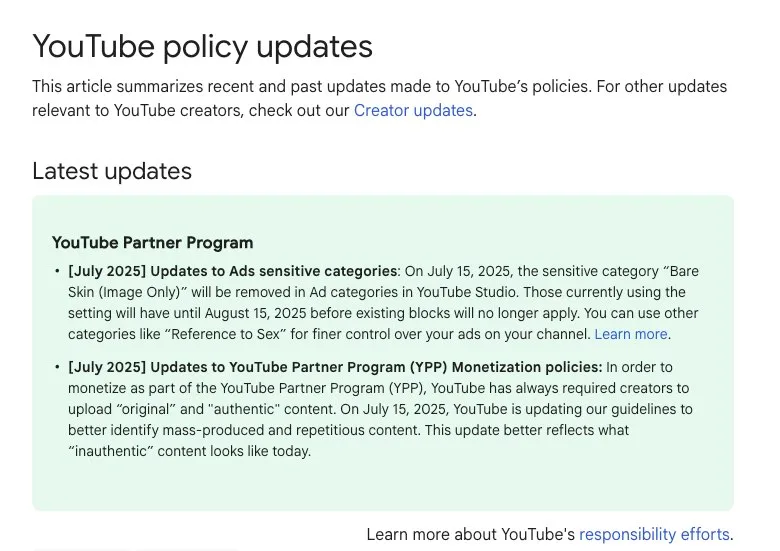
What the YouTube Monetization Rules July 15 Mean for Creators
Under the new policy, creators must go beyond meeting subscriber and watch-hour thresholds. Videos that rely on AI-generated voices, slideshow compilations, or reused clips with little transformation may be demonetised.
Even popular formats like reaction videos or Shorts could be affected if they lack commentary or creative input. YouTube clarified that content must offer a unique experience to viewers.“Adding your voice, face, or point of view could make all the difference,” said a YouTube spokesperson in a recent update.
Creators who use AI tools are not banned outright, but they must ensure their videos are original, engaging, and informative. Simply aggregating clips or using robotic narration won’t be enough.
From July 15, 2025, YouTube will tighten monetization rules.
Only original or meaningfully edited content will earn money. Low-effort, repetitive or AI-generated videos, especially those with AI voices, may lose eligibility. pic.twitter.com/5rQq9r2qsI— Tech Informer (@Tech_Informer_) July 9, 2025
How to Stay Monetized After the YouTube Monetization Rules July 15
To avoid losing ad revenue, creators should:
- Focus on original storytelling and commentary
- Avoid uploading template-based or recycled content
- Add educational or entertainment value to every video
- Document their content creation process for review
YouTube will use both AI and human reviewers to assess content. Channels found violating the new rules may face demonetisation, removal from YPP, or even suspension.
“This is one of the most aggressive pushes yet to reward authentic creators,” noted Business Today.
With millions of creators relying on YouTube for income, this update could reshape the digital content landscape. It’s a clear signal that quality matters more than quantity.
Creators who adapt early may benefit from increased visibility and trust. Those who continue posting low-effort content risk losing monetisation and their audience.