
Fossil Bite Marks Suggest Reptile Killed Giant Bird 13 Million Years Ago
New scans reveal a fatal encounter between Purussaurus neivensis and a flightless terror bird in prehistoric Colombia.
Scientists in Colombia have made a surprising discovery: a big, flightless bird called a terror bird may have been killed by a huge reptile about 13 million years ago. This is based on bite marks found on the bird’s leg bone.
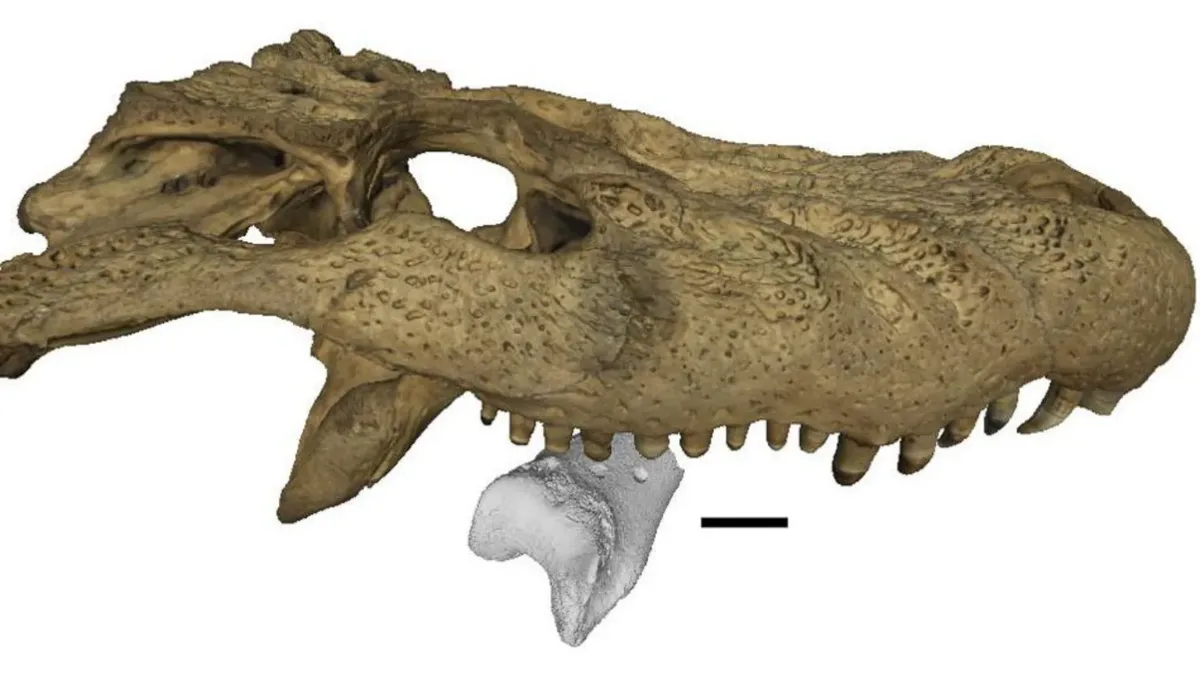
The fossil was found in the Tatacoa Desert, a dry area famous for ancient bones. When experts scanned the fossil, they saw deep tooth marks that matched a giant caiman named Purussaurus neivensis. This creature was similar to a crocodile and could grow up to five meters long.
Researchers say the bird’s bone shows no sign of healing, which means the bird probably died during the attack. “It’s likely the reptile either hunted the bird or started eating it soon after it died,” said Dr. Andrés Link, a scientist from Universidad de Los Andes.
Terror birds were strong predators with hooked beaks and powerful legs. They could grow as tall as 2.5 meters and didn’t fly. For a long time, people thought terror birds were top hunters with few threats. But this new evidence shows they weren’t always safe.
The fossil was first collected by César Augusto Perdomo, who runs a local museum. He gave the bone to researchers so they could study it better. Their work helps scientists understand the kind of animals that lived in South America millions of years ago.
This find shows that even the biggest and strongest animals can face danger. It also helps experts learn more about the ancient ecosystem a place filled with powerful creatures fighting to survive.
