
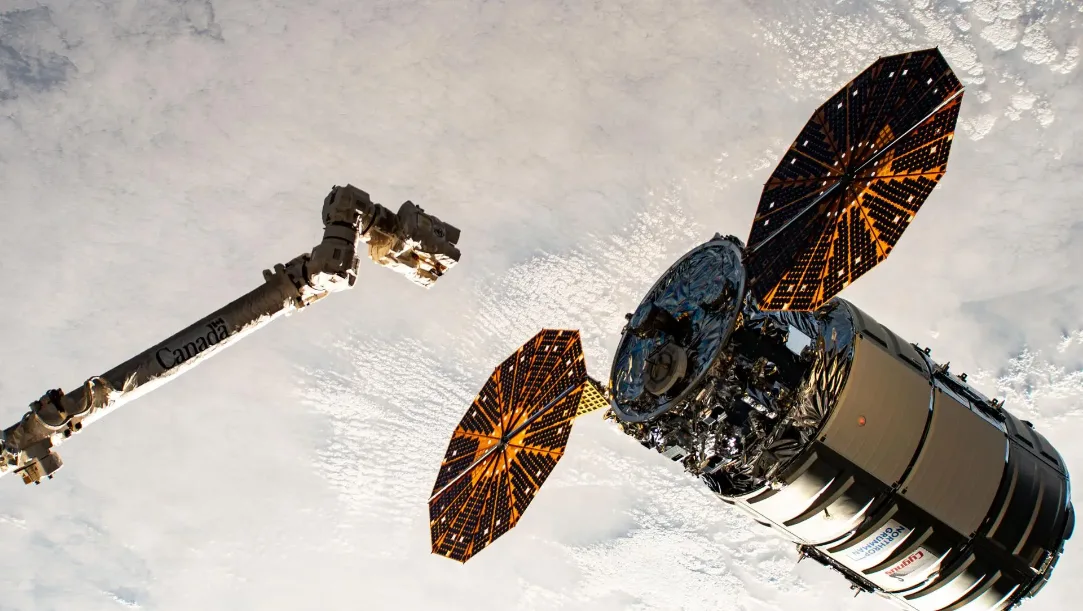
NASA, in collaboration with Northrop Grumman and SpaceX, is set to launch the Cygnus XL spacecraft no earlier than Sunday, September 14, 2025, at 6:11 PM EDT.
This mission, known as CRS-23, will deliver more than 11,000 pounds of science experiments, research materials, and essential supplies to the International Space Station (ISS).
The launch will take place from Cape Canaveral Space Force Station in Florida aboard a SpaceX Falcon 9 rocket, marking the first flight of the upgraded Cygnus XL, which boasts enhanced cargo capacity and solar-powered systems.
What’s Inside the Cargo?
This isn’t just a resupply run—it’s a science-packed delivery. Key payloads include:
- Materials to grow semiconductor crystals in microgravity
- Equipment to improve cryogenic fuel tank designs
- A UV light system to prevent microbial growth in water systems
- Supplies to produce pharmaceutical crystals that may help treat cancer and other diseases
These experiments could have major implications for space travel, medicine, and materials science back on Earth.
How Will the Spacecraft Reach the ISS?
Once in orbit, the Cygnus XL will be captured by the ISS’s Canadarm2 robotic arm on Wednesday, September 17, and installed on the Unity module’s Earth-facing port for unloading.
Over 11,00 pounds of science, research, and supplies is targeted to launch no earlier than Sunday, Sept. 14 to the International @Space_Station aboard the @northropgrumman Cygnus XL spacecraft. https://t.co/fpR6ZhRHvp
— NASA’s Johnson Space Center (@NASA_Johnson) September 9, 2025
The spacecraft is expected to remain docked until March 2026, after which it will safely burn up in Earth’s atmosphere.
Why Is This Mission Significant?
Northrop Grumman has named the spacecraft S.S. William “Willie” McCool, honoring the late NASA astronaut who died in the Columbia shuttle accident in 2003. This tribute adds emotional weight to a mission already rich in scientific promise.
Additionally, this launch marks a rare collaboration between Northrop Grumman and SpaceX, showcasing how commercial partnerships are reshaping space logistics.
What’s Next for Space Science?
As Cygnus XL prepares to lift off, it carries more than just cargo—it carries the future of space-based innovation.
From cancer research to crystal growth, the ISS continues to be a floating lab for breakthroughs that could change life on Earth.
