
Quantum Computing Breakthrough: 3,000 Qubits, No Restart Needed
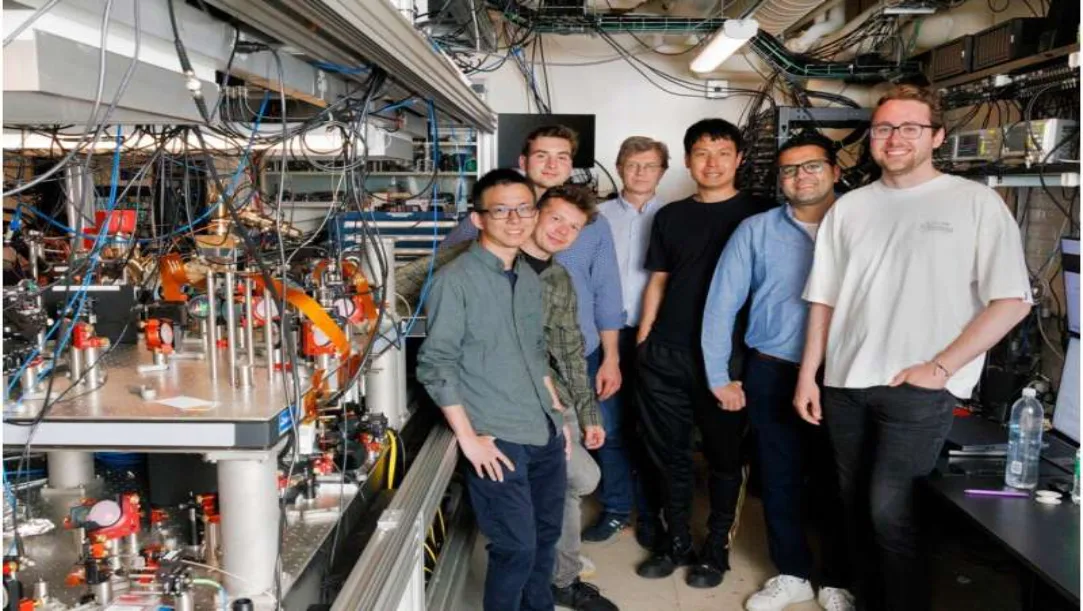
In a landmark achievement, physicists from Harvard and MIT have demonstrated a 3,000-qubit quantum system capable of continuous operation for over two hours, a feat that could reshape the future of computing.
Unlike previous quantum machines that required frequent resets due to atom loss, this new system uses optical lattice conveyor belts and laser tweezers to reload atoms in real time, maintaining coherence and stability.
This breakthrough, published in Nature, represents a major step toward building scalable, fault-tolerant quantum computers that could revolutionize fields like medicine, finance, and climate modeling.
What Is a 3,000-Qubit Quantum Computer?
Quantum computers use qubits—quantum bits that can exist in multiple states simultaneously—to perform calculations far beyond the reach of classical machines, reports Pys.org.
While a 300-qubit system already exceeds the information capacity of the known universe, this new 3,000-qubit array pushes the boundaries tenfold.
“We demonstrated the continuous operation with a 3,000-qubit system,” said Mikhail Lukin, senior author and Harvard physicist. “It’s clear this approach will work for much larger numbers as well”.
How Does Continuous Operation Work?
Traditionally, quantum systems suffer from atom loss, forcing researchers to pause and reload particles. This new architecture solves that bottleneck by using laser-driven conveyor belts to replenish atoms without disrupting the quantum state. The system can reload up to 300,000 atoms per second, enabling persistent operation and deeper quantum circuits.
Why This Matters for Quantum Computing
This innovation could accelerate the development of quantum error correction, atomic clocks, and quantum networks, all of which require long-duration coherence and scalability. The Harvard-MIT team collaborated with QuEra Computing, a startup spun out of their labs, to bring this technology closer to real-world applications.
Will This Trend Continue?
As quantum systems grow in size and stability, the race toward practical quantum computing is heating up. With continuous operation now possible, the next challenge is integrating these systems into commercial and scientific workflows. Will your next computer be quantum-powered?
