
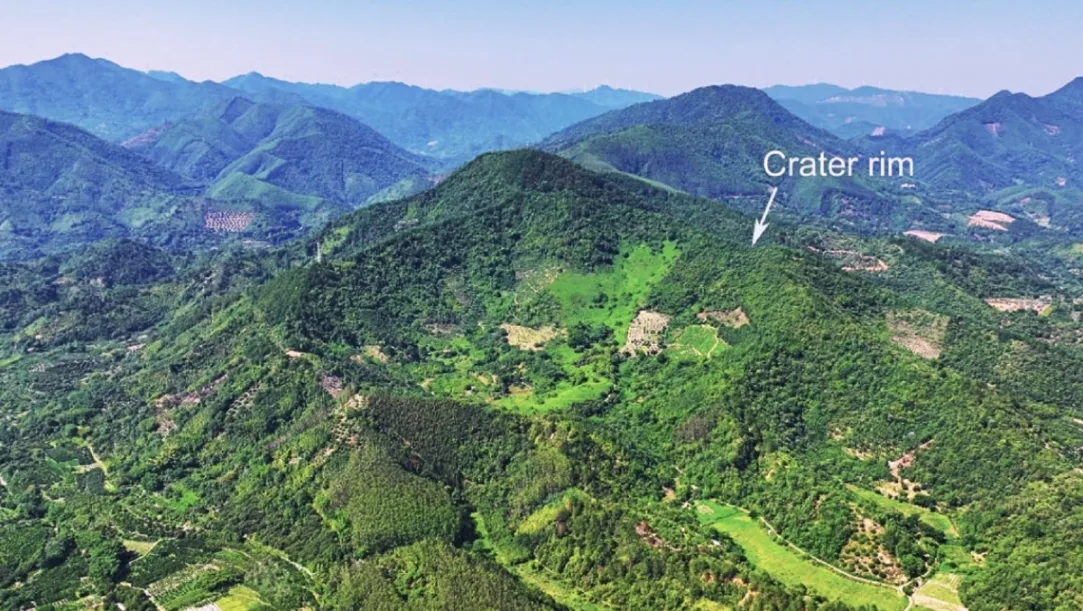
The Jinlin crater, located near Zhaoqing City in Guangdong Province, had remained hidden in plain sight until researchers confirmed its origins.
With a diameter between 820 and 900 meters and a depth of nearly 90 meters, the crater is now recognized as the largest known Holocene impact structure on Earth.
Discovery of the Jinlin crater
Researchers from Shanghai and Guangzhou identified the crater while studying granite formations in the region. Only about 200 confirmed impact craters exist worldwide, making each discovery scientifically valuable.
What makes the Jinlin crater exceptional is its size and relatively young age. Formed during the Holocene epoch, roughly 11,700 years ago, the crater provides rare evidence of a meteorite strike in recent geological history.
Size and scientific importance
The Jinlin crater measures up to 900 meters across, dwarfing Russia’s 300‑meter Macha crater, which was previously considered the largest Holocene impact site. Soil erosion studies suggest the crater was carved during the early to mid‑Holocene.
Shock‑damaged quartz and preserved granite fragments confirm the intense forces involved. Scientists believe the crater’s survival in a high‑erosion environment makes it a geological rarity and a valuable site for studying Earth’s recent impact history.
Global context and expert views
According to ScienceAlert, the discovery sheds new light on how extraterrestrial bodies collide with Earth. “Finding such a massive, well‑preserved crater is surprising given the region’s erosion rates,” explained lead researcher Ming Chen.
The team’s findings were published in the journal Matter and Radiation at Extremes, highlighting the importance of continued exploration in regions where geological features may conceal evidence of past impacts.
Impact on future research
The identification of the Jinlin crater is expected to inspire further studies into meteorite impacts during the Holocene.
Scientists hope the site will provide insights into how such events influenced climate, ecosystems, and human development. As one of the largest craters of its kind, Jinlin may also help refine models predicting the frequency and scale of meteorite strikes in Earth’s recent past.
