
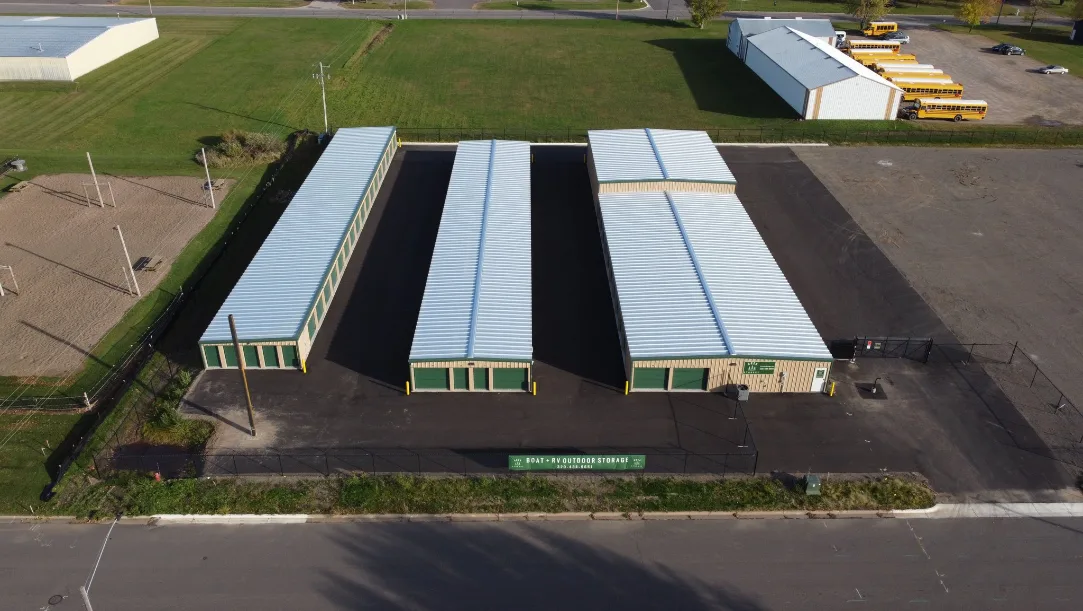
Unlike office, retail, or multifamily housing, self-storage demand remains steady regardless of economic cycles, offering investors a safe haven in uncertain times.
Resilient sector with steady returns
According to a Heitman study, self-storage has consistently outperformed other real estate categories in net operating income over the past 15 years.
Even during periods of recession or rapid growth, occupancy rates and rental demand have remained stable. This resilience stems from the fact that people need storage space whether they are downsizing, relocating, or expanding their lifestyles.
Performance compared to other real estate
While industrial, multifamily, and office properties often fluctuate with job growth and income trends, self-storage facilities remain largely unaffected.
Public Storage, Extra Space Storage, and CubeSmart are among the largest REITs in the sector. Despite their stocks being down as much as 15% year-to-date, analysts note that the underlying fundamentals of the industry remain strong, with steady cash flows and high occupancy levels.
Self-storage consistently outperforms other real estate ventures in profitability, boasting lower construction costs, competitive rental rates, and minimal failure rates. It remains a top-value investment, offering stability and quick resale potential. #selfstorage #realestate pic.twitter.com/Mk39X5pdvq
— Storage Authority (@StorageAuth) October 14, 2025
Market outlook and construction pipeline
Yardi Matrix data shows that as of October 2025, average asking rents for self-storage units stood at $16.77 per square foot, up 0.7% year-over-year.
Climate-controlled units saw a 130 basis point increase in advertised rates, while non-climate-controlled units rose 30 basis points.
The national construction pipeline totaled 53 million square feet, representing 2.6% of existing inventory. Sarasota-Cape Coral led the nation with 9.2% of its inventory under construction, reflecting strong regional demand.
Expert insights
CNBC’s Diana Olick explained, “Self-storage real estate has ‘close to zero’ correlation to the broader economy. That’s a good thing.” She added that the sector’s independence from interest rates and job growth makes it uniquely positioned to weather economic uncertainty.
Investors view this as a hedge against volatility, especially as other property types face pressure from higher borrowing costs and shifting consumer behavior.
Why it matters for investors
For investors seeking stability, self-storage offers predictable income streams and low correlation to traditional economic indicators.
With steady demand and manageable operating costs, the sector continues to attract capital even in challenging macroeconomic conditions.