
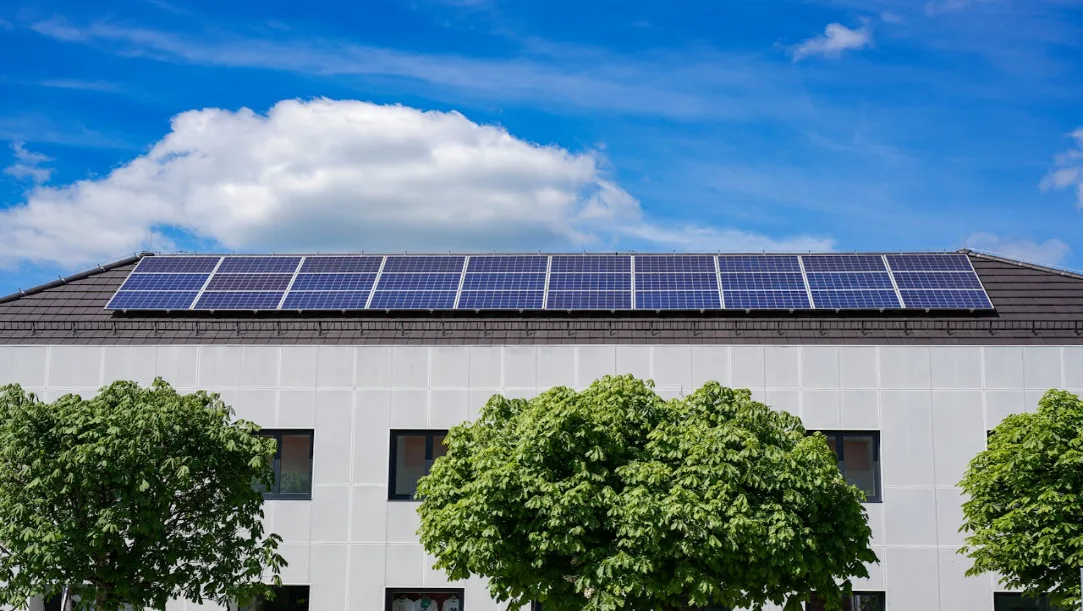
Every day, your home receives free energy from the sun. Whether you use it or not is the only difference. As bills for electricity increase steadily and the reliability of power supplied to various cities remains inconsistent, rooftop solar is proving to be an efficient answer. This less expensive option makes financial sense to a large number of households.
However, before starting with comparisons between choices or calling an installer, it is important to learn how the rooftop systems are priced, which aspects determine the solar panel price, and how to make sure to select the setup that best fits your long-term energy requirements. Let’s look into these one by one.
Understanding How Solar Pricing Works in India
Most homeowners seek rooftop solar systems at a set rate. But solar pricing does not work like buying a single appliance. Rather, it depends on a combination of factors:
- The size of the system
- The type of components
- The complexity of installing it
- State policies
The vast majority of families start out by assessing their monthly electricity consumption in kilowatt-hours (kWh) since their consumption directly relates to the capacity required. And naturally, the required capacity affects the total solar panel price you will be paying for it.
For example, a small 1-2 kW setup may work for a compact home with basic appliances, whereas a bigger household with several cooling systems may need a 5kW or 7kW system. Here, proper evaluation comes into play. Oversizing results in unwarranted cost, and undersizing cuts down on savings in a month.
What Goes Into the Cost of a Rooftop Solar System?
If you break down the total cost, you will realise that you are not only paying for the panels. A typical rooftop installation includes the following components:
- Solar panels (mono- or poly-crystalline)
- Inverter (string / on-grid / hybrid / off-grid type)
- Mounting structures
- DC/AC cables and protection devices
- Installation labour
- The safety and compliance equipment
Each component has its own effect on the price of solar panels.
For example, monocrystalline panels are more expensive than polycrystalline but more productive in areas with less space; a hybrid inverter is more expensive but provides back-up when there is an outage. Even the angle and design of your roof would influence the labour and materials used.
Typical Rooftop Solar Panel Price Ranges in India
Below is a general overview of what residential solar panel price usually looks like in India as of 2024-2025:
| System Size (Residential) | Approximate Total Cost (Before Subsidy) | Notes / Typical Application |
| 1 kW on-grid system | ₹70,000 – ₹80,000 (can go up to 1 lakh) | Suitable for small houses or minimal usage (fans, lights, etc.) |
| 2 kW system | ~ ₹1.5 lakh – ₹1.75 lakh | Good for small family usage. |
| 3 kW system | ~ ₹2 lakh ₹2.4 lakh | Good for small-to-medium household needs |
| 4 kW system | ~ ₹2.7 lakh – ₹3 lakh | Suitable for medium households with moderate appliance usage |
| 5 kW system | ~ ₹2.75 lakh – ₹3.50 lakh | Often considered the “sweet spot” for average homes |
| 10 kW system | ~ ₹5.7 lakh – ₹6.4 lakh (base-variant) | For large houses or households with high energy demand |
In larger installations (such as 25 kW size, which is typically applicable to businesses or large homes), the total cost will usually range between ₹10-20 lakh.
Impact of Subsidy & Net-Metering on Final Cost
Government subsidies significantly contribute to making rooftop solar more affordable, and the PM Surya Ghar: Muft Bijli Yojana has made the adoption even more affordable. The homeowners under this scheme receive:
- ₹30,000 per kW for the first 2 kW (30k for 1kW, 60k for 2kW)
- ₹18,000 for the 3rd kW, and
- Up to ₹78,000 total subsidy for a 3 kW system.
This makes the final solar panel price much lower than the normal market rates for many families. Depending on the size and usage of the system, the scheme also has the capacity to support up to 300 units of free electricity per month.
Key Benefits for a 1 kW System
- The subsidy of ₹30,000 directly cuts the initial price.
- Helps subsidise the consumption of the household.
- Eligible for net-metering, enabling bill credits on excess power.
How Panel & Component Quality Affects Solar Panel Price?
Higher-quality panels and components usually cost more upfront, but they also perform better. For example, mono-PERC or half-cut panels generate more electricity in the same roof area compared to basic panels.
Equally, a quality inverter enhances the efficiency of the system and has a longer lifespan. Because of this, higher quality systems can cost more at the beginning but can provide greater returns in the long run.
As the market has both cost-effective and high-end products, the solar panel price varies widely. That is why the general range of ₹45,000-₹65,000 per kW is a good reference point.
Note: Systems smaller than 3 kW often exceed this range (costing ₹70k-80k/kW) due to fixed installation costs that don’t scale down linearly.
How to Interpret Quotes and Estimate Real Cost?
You should not hurry to select the lowest quote when you get them. Rather, consider every suggestion on the following parameters:
- Panel type and wattage
- Inverter brand and warranty
- Corrosion resistance and structural material.
- Service and installation timelines
- Inclusions like net-metering support or annual maintenance.
Because rooftop solar is a 20-25-year asset, you need to think about long-term performance, durability and serviceability of solar panels, rather than the initial solar panel price. More efficient panels can be more expensive in the short run but will save you more in the long term, as well as leave you less dependent on the grid.
Conclusion
Rooftop solar is a reliable way to lower electricity bills, reduce grid dependence, and secure long-term energy stability for your home.
By choosing the right system size, knowledge of pricing and quality components, you guarantee that you achieve improved performance and smarter savings over the years. The sun keeps shining every day, so why not let your savings shine the same way?
