
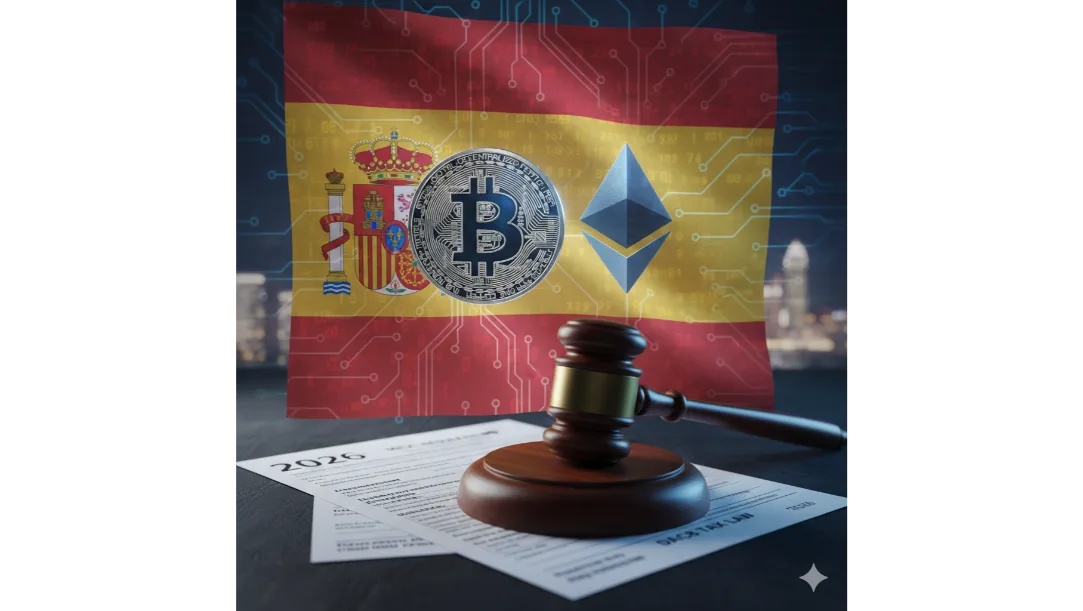
On December 24, 2025, the Spanish government solidified its roadmap to transform the digital asset landscape, confirming that Spain will fully enforce Spain crypto rules 2026 starting January 1.
This major regulatory shift, supported by reports from the European Securities and Markets Authority (ESMA) and the Spanish National Securities Market Commission (CNMV), marks the end of the transition period for digital asset service providers. Consequently, investors and firms must now prepare for an environment defined by strict oversight and mandatory transparency.
The move aligns Spain with the European Union’s Markets in Crypto-Assets (MiCA) regulation. By mid-2026, specifically July 1, any firm providing digital asset services in the country must hold a full operating license. Because the authorities are prioritizing consumer protection, companies that fail to meet these stringent requirements will be forced to cease operations immediately. This “comply or quit” approach ensures that only vetted, financially stable entities can serve the Spanish market.
Full Licensing Requirements Under Spain Crypto Rules 2026
The core of the Spain crypto rules 2026 focuses on the professionalization of the industry. Under the new framework, Crypto-Asset Service Providers (CASPs) must transition from simple registries to comprehensive licenses.
Previously, many firms operated under a temporary “grandfathering” clause, but that window is rapidly closing. To obtain a full license, firms must provide over 100 pages of documentation detailing their internal risk controls, shareholder structures, and anti-money laundering (AML) protocols.
Statistically, the shift is significant. Recent data indicates that while Europe accounts for over 17.5% of global crypto transaction volume, Spain remains a key hub with an adoption rate of approximately 8%. To protect these millions of users, the CNMV has taken over full supervisory powers from the Bank of Spain. This transition ensures that crypto assets are treated with the same level of scrutiny as traditional financial instruments, providing a safer environment for institutional and retail investors alike.
Mandatory Tax Reporting and User Transaction Audits
Beyond licensing, the Spain crypto rules 2026 introduce a revolutionary level of tax transparency. Starting in 2026, the Spanish Tax Agency (Hacienda) will implement the DAC8 directive. This means that all crypto platforms—whether based in Spain or serving Spanish residents from abroad—must automatically report user transactions to tax authorities. This data includes identities, wallet balances, and the total value of purchases and exchanges made throughout the year.
Furthermore, the introduction of “Model 721” requires residents to declare any foreign-held crypto assets exceeding €50,000. According to NEWS BBVA, these measures aim to combat tax evasion and provide the government with a clear view of the digital wealth within its borders.
Transitioning into this new era requires investors to keep meticulous records, as the Hacienda will now have the tools to cross-reference reported gains with actual exchange data.
What the Future Holds for Spanish Crypto Investors
As we head toward 2026, the message from Spanish regulators is clear: the “Wild West” era of digital assets is over. The Spain crypto rules 2026 are designed to integrate blockchain technology into the formal economy.
While the increased reporting may seem daunting, the upside includes greater legal certainty and better protection against fraud. With global crypto ownership projected to hit new milestones in 2026, Spain is positioning itself as a leader in regulated digital finance.
Ultimately, the success of these rules depends on the cooperation between the CNMV and the growing number of licensed CASPs. As the July 2026 deadline approaches, users should verify that their chosen platforms are actively seeking MiCA authorization to avoid service disruptions. By embracing these changes now, the Spanish crypto community can ensure a smoother transition into a fully regulated and transparent marketplace.
