
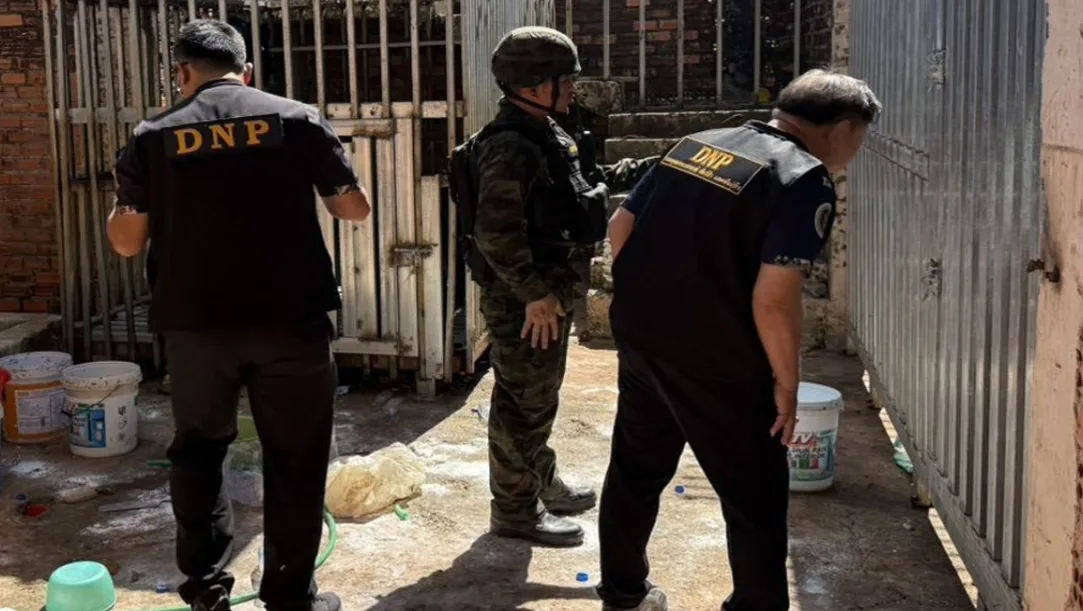
On December 22, 2025, a routine security sweep by the Trat Marine Special Task Force turned into a harrowing rescue mission when soldiers discovered five abandoned Cambodian casino animals left to starve in the Thmor Dar Casino area. The discovery occurred as Thai forces moved to secure the border zone following a period of regional instability. Upon entering the derelict compound, marines found two lions and three bears confined in cramped, filth-ridden metal cages, reportedly having survived without food or water for several days.
The group of animals includes a male and female lion, two Asiatic black bears, and one Malayan sun bear. Because the casino had been recently used as a military command post before being deserted, it is believed the animals were kept as exotic attractions for wealthy patrons or high-stakes gamblers. The rescue operation was immediately prioritized as veterinarians described the animals’ condition as critical, with their ribs clearly visible and their behavior showing signs of extreme psychological distress.
Urgent Medical Intervention for Emaciated Wildlife
Following the discovery of the abandoned Cambodian casino animals, Thailand’s Department of National Parks, Wildlife and Plant Conservation (DNP) launched a high-stakes extraction. Over 20 soldiers and wildlife officials worked under intense pressure to stabilize the creatures before transport. Statistically, the survival rate for emaciated apex predators during transport is low, particularly when anesthesia is required. Consequently, veterinarians spent hours providing vitamin-fortified fluids and monitoring vital signs second-by-second to prevent cardiac arrest during the move.
Marine Task Force Clears Tmorda Casino Area in Trat; Lions and Bears Found Caged and Transferred to Wildlife Authorities
The Trat Marine Task Force has deployed personnel to secure and clear the Tmorda casino site after border tensions in Trat Province began to ease.
During… pic.twitter.com/6qc1hy2jEC
— Pure Guava (@pureguava10300) December 23, 2025
The logistics of the rescue were further complicated by the rugged border terrain and the presence of landmines in the surrounding area. According to The Straits Times News, the DNP director-general, Atthapol Charoenchansa, confirmed that the animals were in a “distressing scene,” appearing thin and panicked. To minimize further trauma, the team utilized heavy machinery to lift the heavy cages onto transport convoys that departed for specialized rehabilitation centers in Thailand.
Rehabilitation and Legal Scrutiny for Casino Owners
While the abandoned Cambodian casino animals are now safe, the focus has shifted to the recovery process and a legal investigation into their origins. The three bears have been relocated to the Bang Lamung Wildlife Breeding Station in Chon Buri, while the lion pair is currently receiving 24-hour care at the Khao Son Wildlife Breeding Station in Ratchaburi. Experts estimate that full physical recovery could take several months, as the animals must be gradually reintroduced to a healthy diet to avoid refeeding syndrome.
Furthermore, authorities are investigating the Chinese-linked casino network that previously operated at the site. Trading and keeping lions and bears without proper permits violates both Cambodian law and international CITES regulations. As the DNP continues to gather evidence, this case serves as a grim reminder of the dark side of the unregulated casino industry in border regions. Ultimately, the successful rescue stands as a testament to the swift coordination between military and wildlife officials, ensuring these five animals a second chance at life in a sanctuary environment.
