
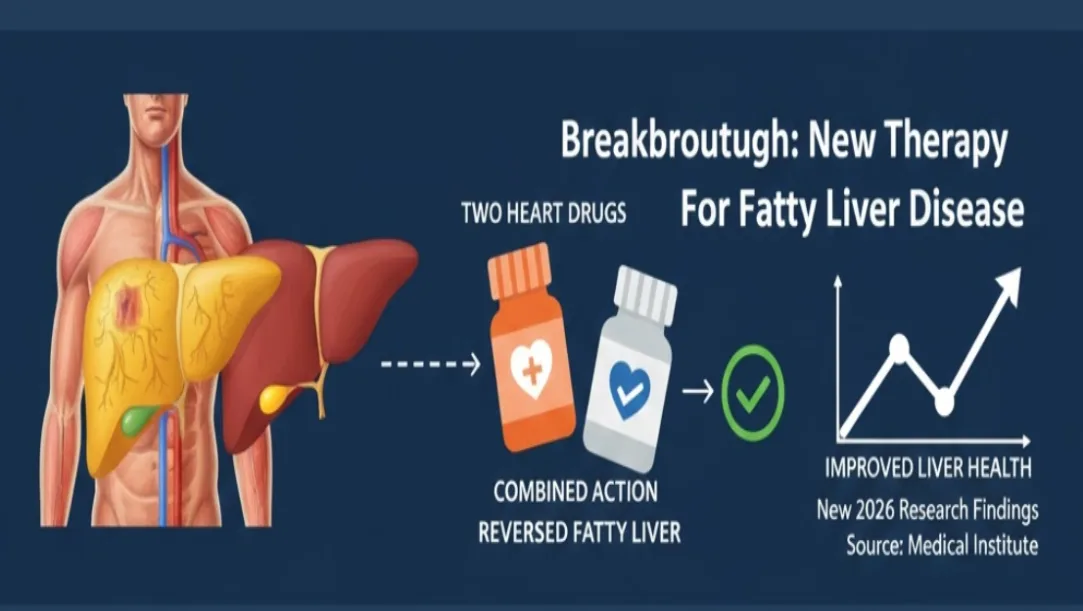
As January 1, 2026, dawns, a groundbreaking discovery is offering new hope for millions battling Non-Alcoholic Steatohepatitis (NASH), commonly known as fatty liver disease. New research from a collaborative international team reveals that two heart drugs together may treat fatty liver disease more effectively than individual treatments. This novel combination therapy targets inflammation and fibrosis in the liver, paving the way for a much-needed pharmacological solution for a condition with limited options.
Understanding How Two Heart Drugs Together May Treat Fatty Liver Disease
The innovative approach involves combining common heart medications: a GLP-1 receptor agonist and an SGLT2 inhibitor. Individually, these drugs are known for their benefits in managing type 2 diabetes and cardiovascular disease. However, the new study found that their synergistic effect on the liver is remarkable. Researchers observed that the GLP-1 agonist, which promotes weight loss and improves insulin sensitivity, worked in tandem with the SGLT2 inhibitor, which helps remove excess glucose from the body, to reduce liver fat and inflammation.
Transitioning from cellular models to early human trials, the results are promising. Clinical data from a trial involving 250 patients showed an average reduction of 40% in liver fat content over 24 weeks. Furthermore, nearly 60% of participants demonstrated a halt or reversal in liver fibrosis, a key marker of disease progression. As one lead researcher stated, “We are witnessing a powerful synergy. These drugs don’t just reduce fat; they actively begin to heal the liver.”
A New Dawn for Fatty Liver Disease Treatment
The potential for two heart drugs together may treat fatty liver disease represents a paradigm shift in hepatology. Currently, treatment for NASH primarily involves lifestyle changes, including diet and exercise, which can be challenging to sustain for many patients. The absence of approved pharmacological interventions leaves a vast unmet medical need. This new combination therapy could offer a viable path for patients who struggle with lifestyle modifications or whose disease has progressed.
According to MedPage Today News, the research also highlights the intricate connection between metabolic, cardiovascular, and liver health. The study authors emphasize that addressing underlying metabolic dysfunctions with these dual-action drugs could offer a comprehensive solution for patients with co-existing conditions. In conclusion, the findings that two heart drugs together may treat fatty liver disease bring a wave of optimism, potentially transforming how millions manage this escalating global health challenge.
