
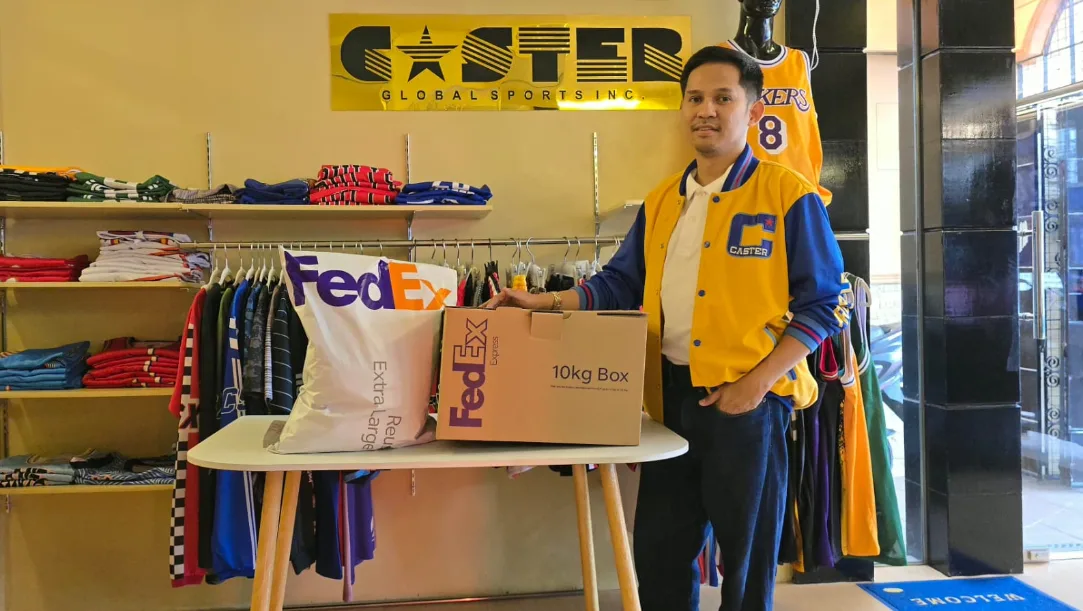
In the dynamic world of sports apparel, success demands more than quality—it calls for vision, innovation, and the courage to push boundaries. These values have been at the heart of Caster Global Sports Inc.’s journey to becoming a trusted name in the industry.
Founded in the early 1980s by Carlito Atienza, a master tailor in Metro Manila, Caster Sportswear began with a clear mission: to fill the gap for affordable yet high-quality customizable sportswear. Carlito’s craftsmanship and commitment quickly earned the brand a reputation among discerning clients, including major banks and universities.
For decades, Caster thrived locally, but it was the fresh perspective of the second generation that unlocked its global potential—transforming a homegrown brand into an international player.
Going global
The turning point came with the next generation. Butch Atienza, vice president, Caster Global Sports, brought a global perspective from his experience at a multinational company. He saw that there was a growing demand overseas for the personalized kits his family has been producing for decades. At that time, Caster was well-known for making uniforms for local corporate clients. But expanding internationally meant rethinking logistics and embracing a bigger vision for growth.
Butch researched logistics providers and found FedEx. “We began shipping with FedEx in the early 2000s after finding the promotional box rates really attractive,” Butch shares. “Back then,we were sending five to nine packages a week, until a FedEx representative noticed our volume and visited us to open an account.”
Success in the sports apparel industry demands more than quality—it requires a vision that knows no boundaries. By bridging the gap between traditional family values and modern logistics, Caster Global Sports is bringing bespoke Filipino designs to athletes worldwide.
This collaboration, now spanning more than 20 years, lowered the barrier to exporting and helped Caster Global test foreign markets without overcommitting resources. Shipments to the U.S. now take two to five days, shortening the feedback loop between customer and manufacturer.
Standing out in a crowded market
Caster’s competitive edge isn’t simply speed. In a market crowded with about 20 local competitors, the company leans into craftsmanship and customization for differentiation. While many suppliers focus on basic sublimated prints, Caster offers embroidery, tailored designs and one-off recreations. Customers can send a photo and receive bespoke sportswear. This service resonates with buyers in the U.S. and Europe who seek distinctiveness over off-the-rack sameness.
Behind the promise is a disciplined production process. Every order begins with a specifications sheet and sample production before mass rollout- a simple quality-control step that reduces costly mistakes. Investment in new equipment like full-body printers and modern embroidery machines , further improves consistency and throughput. Typical lead times range from two to three weeks for small runs (50–100 pieces) to three to six weeks for larger orders (around 1,000 pieces), allowing the company to serve both grassroots clubs and larger teams.
When errors occur, Caster communicates costs and options clearly, ensuring transparency to customers who have generally accepted the need to cover replacement shipping because of the service’s perceived value. This trust, coupled with responsive customer support, has turnedone-time orders into repeat business.
Scaling a manufacturing business means jugglingcash flow, balancing bespoke work with high volume production, and maintaining consistent quality as demand rises. These challenges shaped Caster’sstrategic decisions: standardizing specifications, documenting workflows, and partnering with a logistics provider that can scale with them.
Lessons from the past, and hopes for the future
Looking ahead, Butch is exploring international franchising and partnerships. Interest has come from clients in Australia, Malaysia, the United States and Switzerland, and the company is studying franchising models and assessing options. Locally, discussions have begun about sponsorships and collaborations with larger sports organizations, including talks around the Philippine Basketball Association.
For Philippine entrepreneurs watching from the sidelines, Butch’s advice is pragmatic: focus on product quality, invest in customer service, and build partnerships that reduce friction when expanding abroad. “Shipping reliably was a game-changer for us,” he says, noting that logistical confidence made it possible to sell beyond the Philippines without compromising service.
From Carlito Atienza’s vision in the 1980s to Butch’s global expansion in the 2000s, Caster Global Sports Inc. proves that Philippine craftsmanship, family values, and strong partnerships can push businesses to thrive in the global market. As they look to 2026 and beyond, this family business built on skills, quality, and innovation is only getting started.
Discover more inspiring stories from entrepreneurs across Asia Pacific on FedEx Business Insights.
Explore more official announcements in our Press Release section.
