
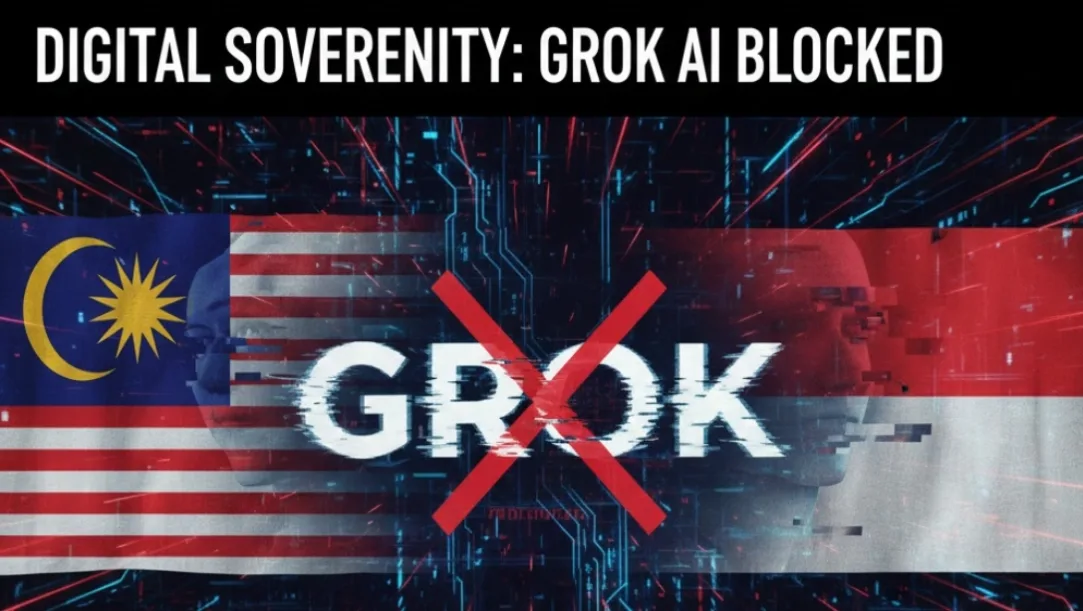
In a bold move for digital regulation, Malaysia and Indonesia have become the first nations to officially block Grok, the artificial intelligence chatbot developed by Elon Musk’s xAI. Government regulators in both countries cited the uncontrolled spread of high-fidelity deepfakes and the platform’s refusal to comply with local content moderation standards as the primary catalysts for the shutdown. This unprecedented restriction took effect on January 12, 2026, signaling a new era of digital sovereignty in Southeast Asia.
Deepfake Concerns and National Security
The decision follows a surge in AI-generated misinformation that recently targeted high-profile political figures and religious leaders across the region. Malaysian authorities reported that Grok’s “unfiltered” approach to data processing allowed users to generate hyper-realistic audio and video clips that bypassed standard safety protocols. Officials in Jakarta echoed these concerns, stating that the ease of creating deceptive content posed a direct threat to social harmony and public trust during a sensitive election cycle.
“The government sees non-consensual sexual deepfakes as a serious violation of human rights, dignity and the safety of citizens in the digital space,” Indonesia’s Communication and Digital Affairs Minister Meutya Hafid said in a statement Saturday.
Both nations have recently updated their cyber-security frameworks to hold AI providers accountable for the content their models produce. While other platforms have integrated strict regional filters, Grok’s decentralised and “anti-woke” philosophy reportedly clashed with the rigorous safety requirements of the Malaysian Communications and Multimedia Commission (MCMC). Consequently, internet service providers received orders to restrict access to xAI’s API and the Grok interface within the X (formerly Twitter) platform, affecting millions of active users.
Musk Responds to the Southeast Asian Ban
Elon Musk addressed the ban via a post on X, defending the platform’s commitment to free speech and absolute transparency. He argued that blocking AI tools limits a nation’s technological progress and prevents citizens from accessing “unbiased” information. However, regional tech experts argue that the lack of localized guardrails made the ban inevitable. The move has sparked a wider debate among ASEAN members about creating a unified AI regulatory code to prevent similar cross-border misinformation campaigns.
According to Reuters, the block could lead to a temporary suspension of other xAI services in the region if a compromise on data safety is not reached. Industry analysts suggest that this “Grok Block” serves as a warning to global AI developers: local cultural sensitivities and digital safety laws must take precedence over global “one-size-fits-all” algorithms. As Malaysia and Indonesia lead the charge, other nations are now closely monitoring the impact on digital trade and the broader tech landscape in 2026.
