
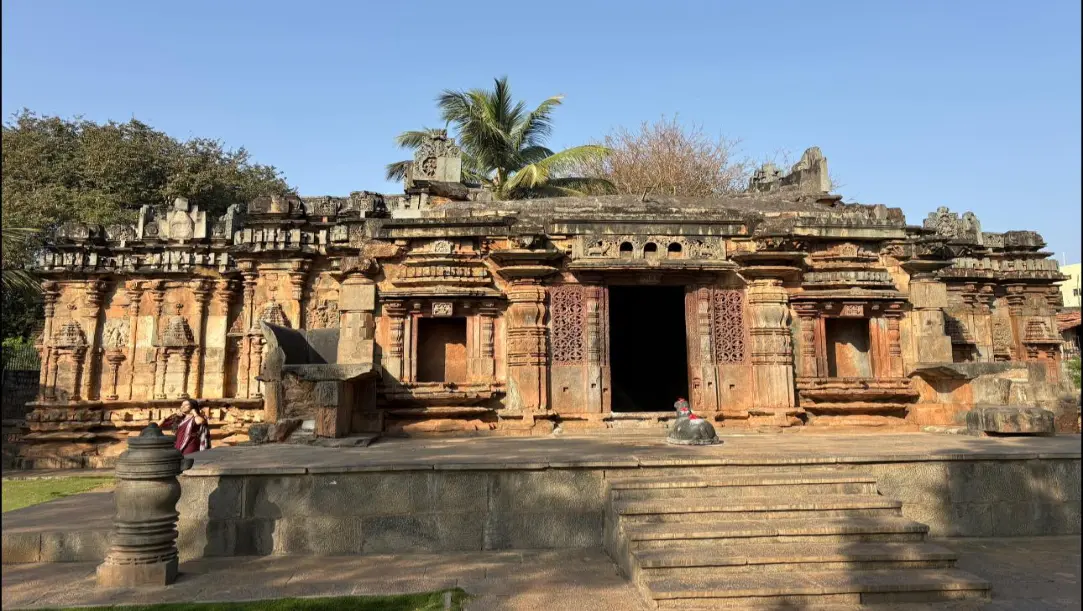
The Chandramauleshwara Temple stands as a stunning 11th-century monument in Unkal, Hubballi, showcasing the intricate beauty of Chalukyan architecture. This ancient Shiva temple attracts history enthusiasts with its unique four-door design and detailed stone carvings that have survived for nearly a millennium. Visitors recently rediscovered its quiet glory on February 7, 2026.
Chalukyan Architecture and Ancient Stone Inscriptions
Architects from the Chalukyan era built this temple using heavy black granite and red sandstone, creating a structure that lacks the traditional gopura but excels in sculptural detail.
The walls feature dancing Lord Ganesha and beautiful Jalandhara patterns that capture the eyes of every pilgrim. Local history confirms the age of the site through tangible evidence found in the immediate surroundings.
Two 12th-century stone inscriptions located in Unkal village prove that the temple existed in or before the 12th century. These records provide a window into the 900-year history of the region.
While the temple remains unfinished in several sections, the precision of the existing carvings remains a marvel of ancient engineering. The sanctuary serves as a protected monument under the Archaeological Survey of India (ASI), ensuring the preservation of these 1,000-year-old stories etched in stone.
The Mystery of the Chaturmukha Linga
One specific feature sets this shrine apart from other Shiva temples in North Karnataka. Originally, the temple designers placed the Chaturmukha linga—a rare four-faced image of Shiva—at the very center of the sanctum.
This allowed a pilgrim to see one face of Shiva regardless of where he or she stood within the temple grounds. This central placement emphasized the omnipresence of the deity across all cardinal directions.
According to Arvind Canchi, authorities moved the Chaturmukha linga at some point. It now sits on the western side of the temple rather than in its original central location.
Even with this change, the temple continues to draw devotees and tourists who walk through its four separate entrances to experience the serene atmosphere. The site remains a vital link to the architectural heritage that flourished under the Chalukyan kings between the 11th and 12th centuries.
Stay tuned to PanAsiaBiz for more updates on Karnataka’s historical landmarks and local heritage discoveries.
