
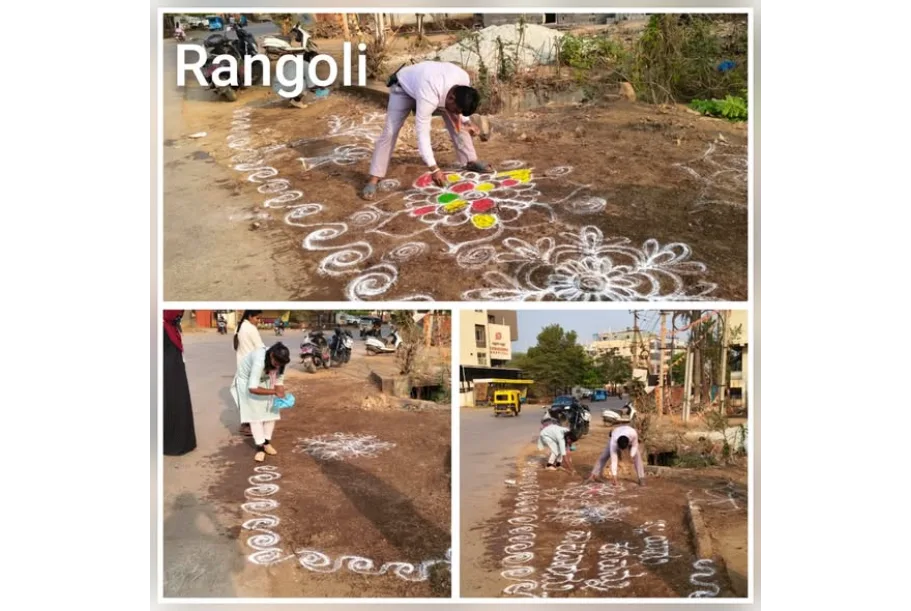
Residents of Hubballi are witnessing a creative shift in urban sanitation as local authorities replace piles of trash with traditional art. The Hubballi-Dharwad Municipal Corporation (HDMC) recently targeted a persistent “garbage black spot” located near Tatvadarshi Hospital in Ward 48.
Workers cleared the accumulated waste and immediately decorated the ground with vibrant Rangoli patterns to discourage future littering. This innovative cleanliness drive reached its completion on February 18, 2026.
Municipal Officials Lead Local Sanitation Campaign
Action at the Zonal Office 05 level ensures that neighborhood-specific issues receive the necessary attention. The Zonal Commissioner personally oversaw the operation, accompanied by Ward Health Inspectors and community organizers.
These officials spent the morning educating neighbors about the health risks associated with dumping waste near medical facilities. By involving the “Jamadars” and ground staff, the corporation sent a clear message that maintaining a hygienic environment remains a top priority for the twin cities.
According to the Hubballi-Dharwad Municipal Corporation Official Portal, the city aims to improve its national sanitation ranking through these localized interventions. Clearing even a single black spot can reduce local pest populations and improve the overall air quality for patients and residents nearby.
The team used colorful powders to draw geometric patterns where piles of plastic once sat, effectively turning an eyesore into a community focal point.
Raising Awareness for a Cleaner Ward 48
Sustaining a clean environment requires more than just one-day events; it requires a permanent shift in public behavior. Community organizers spoke with local shopkeepers and homeowners, urging them to hand over segregated waste to municipal collection vehicles instead of using street corners.
“Cleanliness is a shared responsibility between the government and the citizens,” noted a health inspector during the drive. As the city moves toward the mid-2026 economic and professional goals many residents are anticipating, maintaining a hygienic urban environment becomes essential for collective progress. Public health officials believe that seeing Rangoli instead of trash will psychologically deter people from dropping litter in the future.
