
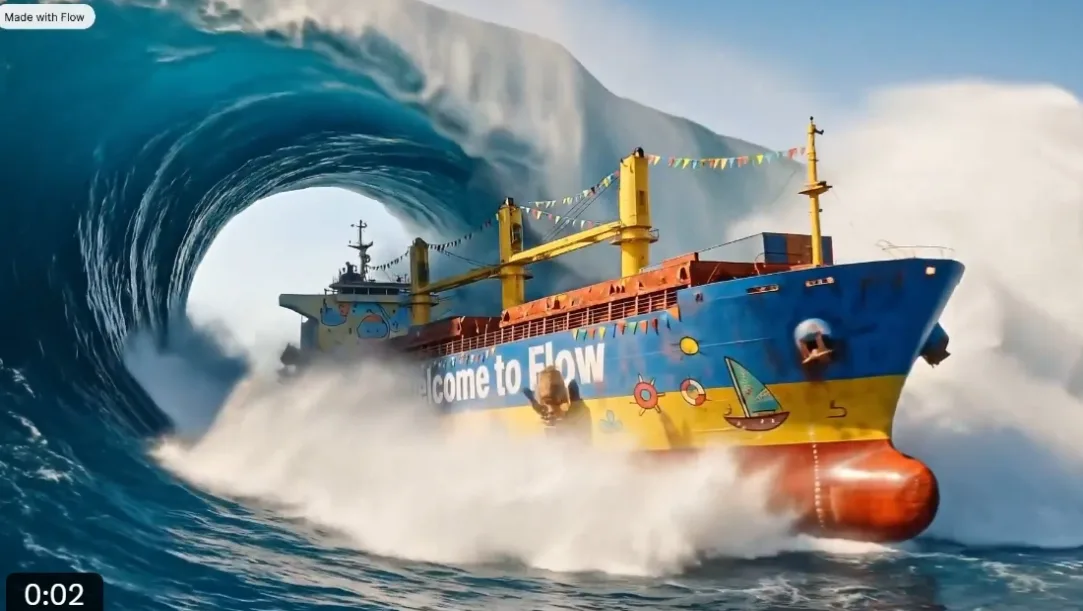
Google Labs has officially overhauled its AI creative suite, transforming “Flow” from a simple video generator into an all-in-one production studio. We saw the integration of high-fidelity image tools and professional-grade editing controls to streamline complex workflows as of February 25, 2026.
The scale of adoption is massive. Our sources confirmed that users have already generated over 1.5 billion images and videos since the platform’s initial launch, prompting Google to merge its standalone experiments, “Whisk” and “ImageFX,” directly into the Flow interface.
Is this the end of traditional video editing software?
Precision is the new standard. Flow now features a “lasso tool” that allows creators to select specific areas of an image and use natural language commands—like “add Koi fish in the water”—to make instant, localized changes.
Pure creative control. We talked to developers who highlighted the new “Nano Banana” integration, which allows static images to be used as instant reference frames for “Veo” video generations without ever switching tabs.
As Google’s home for experimental AI innovation, what excites us most is trying new things, learning, and exploring revolutionary ways to bring the power of our AI models directly to you.
Keeping that Labs energy going, starting today, Whisk and ImageFX will begin to join forces… pic.twitter.com/WnytVW4Vjh
— Google Labs (@GoogleLabs) February 25, 2026
What are the standout “Pro” features?
Asset management just got a 100% upgrade. According to the official Google Labs update https://blog.google/innovation-and-ai/models-and-research/google-labs/flow-updates-february-2026/.
The redesigned library uses a new “asset grid” where you can group related media into “Collections” and use the “@” symbol to quickly reference specific files in your prompts. One specific feature anchors this professional shift: users can now precisely direct camera movements, such as pans and zooms, or “extend” existing clips to see what happens next in a scene.
Seamless transition for early adopters. Starting in March, users can opt-in to transfer all their legacy projects from other Google AI labs directly into their new Flow library to ensure zero data loss.
The workspace is now a unified canvas. From removing unwanted objects to orchestrating complex cinematic motions, Flow is positioning itself as the central pillar for the next generation of digital storytelling.
