
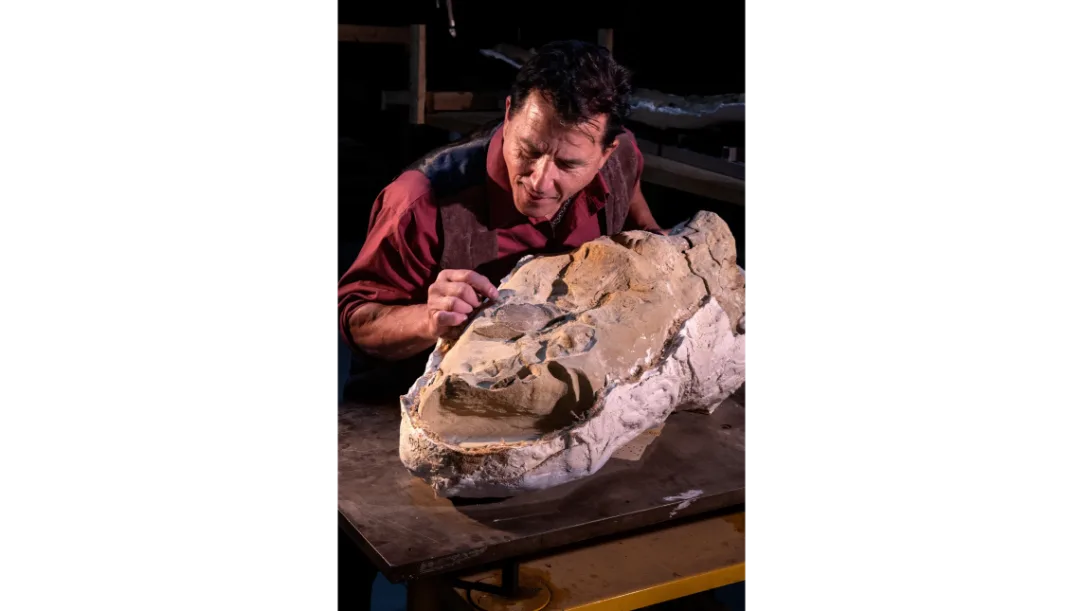
A 66-million-year-old dinosaur ‘mummy’ discovered in Wyoming has stunned scientists—not because of its skin, but because of the clay mask</strong that preserved it.
According to Yahoo News and La Brújula Verde, the fossilized remains of a juvenile Edmontosaurus were found with remarkably intact scaly skin—thanks to a thin, fine layer of clay that acted like a natural mold.
Dinosaur Mummy Clay Mask Preserved in Wyoming
The fossil was unearthed in the Lance Formation, a region in eastern Wyoming known for its rich prehistoric deposits. This area, dubbed the “mummy zone,” has produced at least six well-preserved dinosaur specimens in just a 10-kilometer stretch.
The Edmontosaurus, estimated to be two years old at the time of death, was covered by floodwaters and sealed in clay, creating a perfect imprint of its skin.
Clay Mask Reveals Prehistoric Skin Details
Unlike traditional fossilization, this process didn’t preserve the actual skin. Instead, the clay formed a detailed mask that captured the texture and wrinkles of the dinosaur’s body. Paleontologist Dr. Paul Sereno explained, “It’s not the skin itself—it’s the impression of the skin, preserved by a clay mold.” This breakthrough helps scientists understand how soft tissues can be recorded without being physically preserved.
Stats and Scientific Impact
The Edmontosaurus fossil is believed to be 66 million years old, dating back to the late Cretaceous period. The Lance Formation has yielded over a dozen significant finds, but this specimen stands out for its clarity and completeness. Researchers used advanced imaging and sediment analysis to confirm the clay mask’s role in preservation.
Why This Dinosaur Mummy Discovery Matters
This discovery changes how scientists interpret “mummified” fossils. It suggests that many well-preserved dinosaur remains may not contain original skin, but rather detailed impressions formed by geological processes. Additionally, it highlights the importance of sediment composition in fossil preservation.
Trending Relevance and Future Research
As interest in paleontology grows, especially with AI-enhanced fossil analysis, this find could inspire new techniques for studying ancient life. The clay mask method may help identify hidden details in other fossils previously overlooked. Scientists plan to revisit other specimens in the Lance Formation using this new approach.
According to Yahoo News, this discovery is “a window into the past,” offering a rare glimpse into the appearance and environment of dinosaurs just before their extinction.