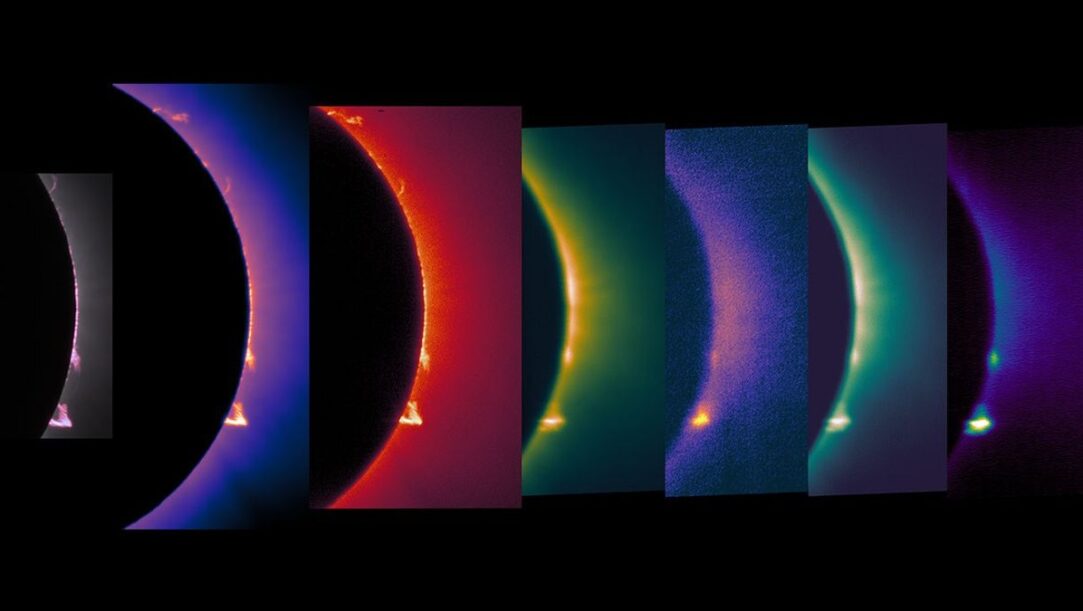
We saw plans for the WB‑57 jet, which will fly at 50,000 feet with four advanced cameras. Our sources confirmed the aircraft can capture 20 images per second in visible and infrared light. “From our unique perspective on Earth during a total solar eclipse, scientists can study the Sun’s corona in a way we can’t from anywhere else,” said Kelly Korreck, NASA Eclipse Program Manager.
Ground observers will see the corona for 2 minutes 18 seconds, but the jet extends this to nearly 3 minutes by chasing the shadow. We talked to researchers who said the mission could reveal why the corona reaches temperatures of over 1 million °C while the Sun’s surface is only 6,000 °C.
NASA’s WB-57 jet studies eclipses from about 50,000 feet (15,000 meters) — above most of the haze and turbulence that blur the view below, for a sharper look at the Sun’s corona. The WB-57 will observe the Aug. 12 total solar eclipse from above.
More: https://t.co/zPn8UavJ3m pic.twitter.com/WP5mx2M8XJ
— NASA Solar System (@NASASolarSystem) August 8, 2026
Student teams are also joining the effort. In Iceland, 80 balloons will launch from 18 hours before to 8 hours after the eclipse, measuring the boundary layer of the atmosphere. In Spain, six balloons equipped with 360° cameras and ozone sensors will track changes. Previous tests showed ozone levels dropped during totality in April 2024.
Amir Caspi of the Southwest Research Institute explained, “The Sun is always changing. Every eclipse is different. We learn from each eclipse how to better observe the next one.” Social media embeds will highlight live reactions as NASA streams coverage worldwide.
Meanwhile, digital assets showed mixed moves. Bitcoin trading slipped 1.9%, Ethereum fell 1.5%, while Solana gained 1.1% and Ripple (XRP) rose 0.6% according to Reuters. Analysts said investor sentiment remains cautious, but the eclipse buzz is drawing global attention to science and technology.
NASA confirmed live coverage will be available at NASA Live. Residents in parts of the U.S. will see a partial eclipse, with officials urging safe viewing methods like solar glasses and indirect projection.