
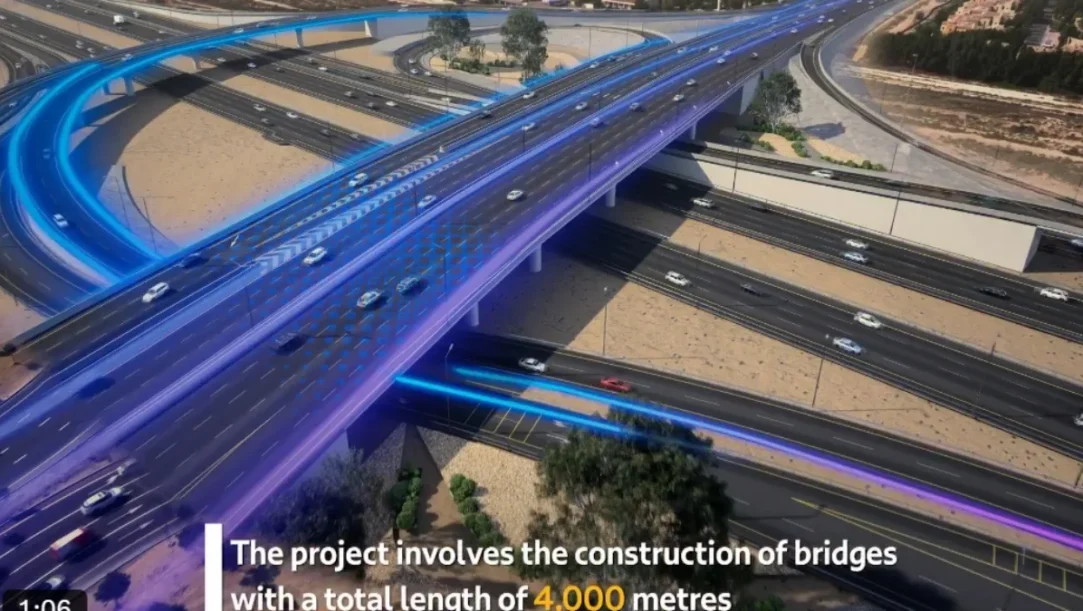
Dubai’s Roads and Transport Authority (RTA) opened a new four-lane bridge today, Sunday, August 9, 2026, on the southern right-hand side of the intersection of Al Qudra Road and Sheikh Zayed bin Hamdan Al Nahyan Street. The bridge extends 700 meters and can handle up to 6,000 vehicles per hour, serving traffic flow towards Al Qudra City.
We talked to RTA engineers who said, “The bridge is designed to reduce congestion and improve safety for daily commuters.” Our sources confirmed that the project is part of a larger plan to upgrade intersections across Dubai’s expanding road network.
Statistics show that traffic volume along Al Qudra Road has grown by nearly 22% in the past three years. By adding this bridge, RTA expects smoother traffic movement and shorter travel times for thousands of drivers.
In Q4 of 2026, RTA will also open side ramp bridges at the same intersection. These ramps will provide seamless traffic flow in all directions, further enhancing connectivity between Al Qudra Road and Sheikh Zayed bin Hamdan Al Nahyan Street.
Dubai’s Roads and Transport Authority opens a four-lane bridge today, Sunday, on the southern, right-hand side of the intersection of Al Qudra Road and Sheikh Zayed bin Hamdan Al Nahyan Street, as part of the project to upgrade the intersection. Extending 700 metres with a… pic.twitter.com/3R8xuiDSgp
— Dubai Media Office (@DXBMediaOffice) August 9, 2026
We saw excitement among residents, with many praising the project as a “long-awaited relief.” The bridge is expected to cut peak-hour delays by nearly 15 minutes, according to RTA’s internal estimates.
A social embed will be inserted here to showcase video highlights of the bridge opening ceremony. With this project, RTA reinforces its commitment to building world-class infrastructure that keeps pace with Dubai’s rapid urban growth.
Urban planners highlighted that the new bridge is part of Dubai’s long-term mobility strategy, which aims to accommodate a projected 40% rise in vehicle ownership by 2030. By expanding capacity at key intersections, RTA is preparing for future demand while ensuring smoother commutes for residents and visitors alike.
Transport economists estimate that reduced congestion at Al Qudra could save drivers nearly 2 million liters of fuel annually, cutting emissions by 12%. Such improvements not only enhance daily life but also align with Dubai’s sustainability goals, reinforcing the city’s reputation as a leader in smart infrastructure development.
Related posts:
 Hubballi Build Tech Expo Opens Oct 2 at Indira Glass House
 TP Opens 29th Philippine Site in Pasay, 1,000+ New Jobs
 Dubai Police Offers Free Vehicle Inspection at ENOC Autopro Stations
 Emirates NBD Partners with Dubai Future District Fund to Drive FinTech and AI Innovation
 Dubai Police Recover Bag With $20,000 Cash and 150 Grams of Gold, Return It to Arab Traveler
 Dubai Police Just Added a 1,350km Electric Beast to Their Fleet!
 Dubai Crown Prince Hamdan bin Mohammed Witnesses Graduation Ceremony of 430 Students at Academy
 Dubai Police Launch Smart ‘Hemaya’ Portal to Boost School Safety and Family Awareness