
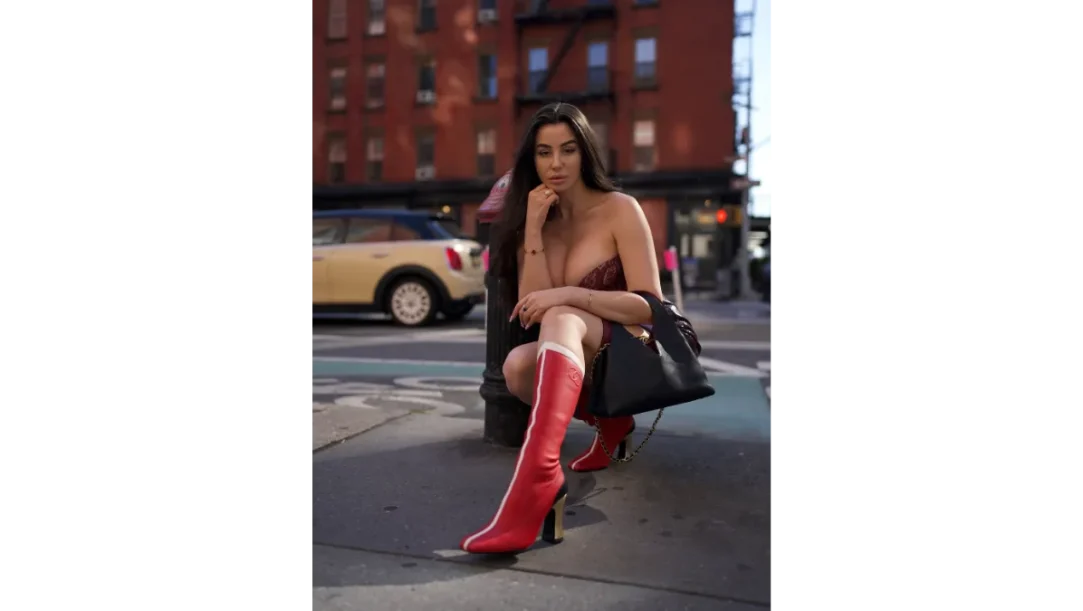
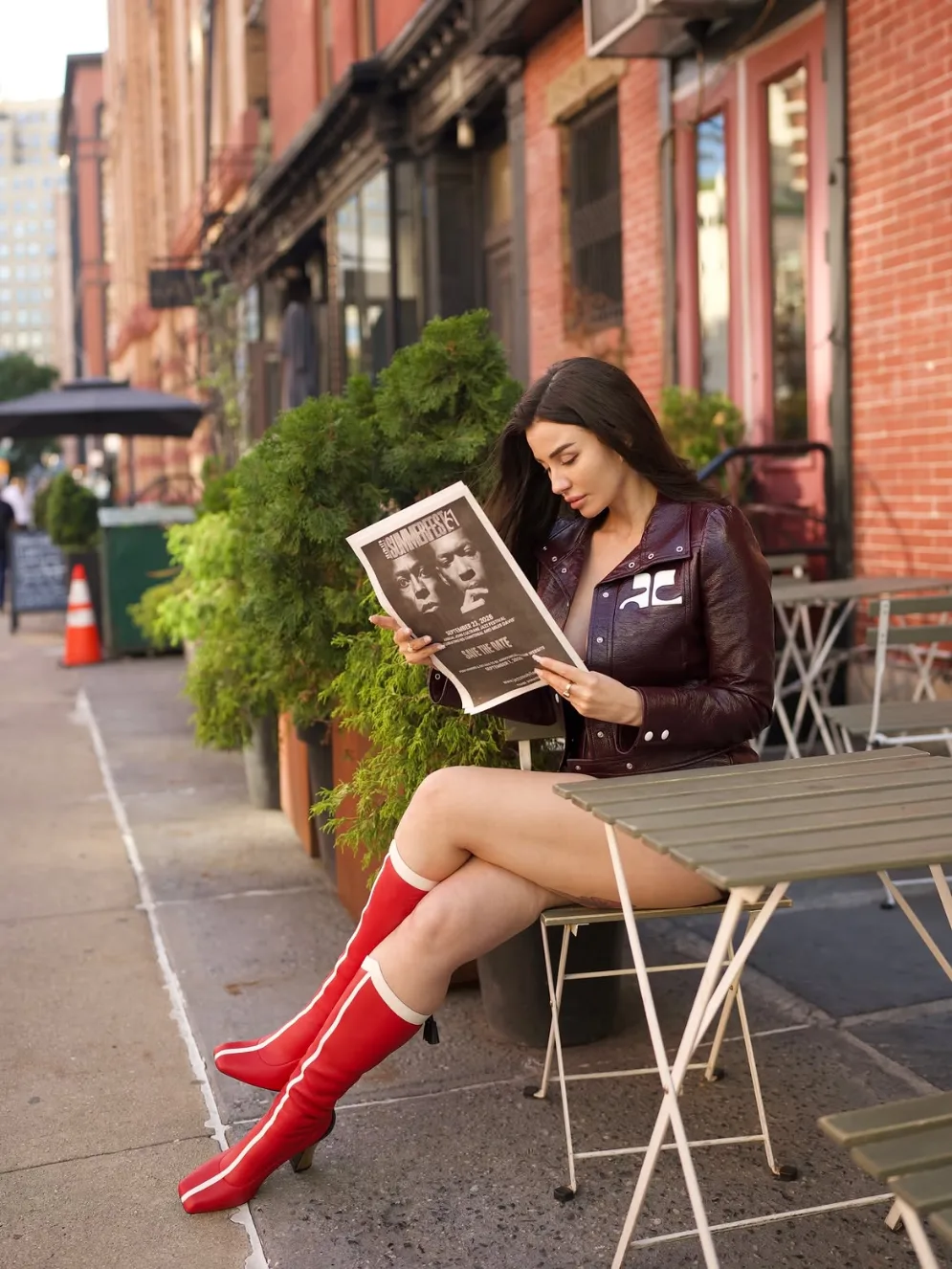
What fans wrote under the Tribeca post
One reply called the face card a banger. Another skipped the face and went straight to the arms. “Those veins.” A third person wrote “So hot baby.” Then came “Crush,” and a shorter “Big fann.”
After that the thread turned into fire emojis, a few claps, and a plain “Wow.” Nobody asked if Tribeca meant a street in New York or just a name for the set. They looked at the picture and typed whatever came first.
She gave them a place name and a photographer tag. They answered like it was a close-up. The picture is doing the work. The caption is not.
Why a one word caption was enough
Tribeca is a New York neighborhood, and the post never says she was standing on a corner there. It could be a location. It could just be a mood she liked. The only firm credit is the photographer.
View this post on Instagram
Andriani has posted tight fashion frames for years without explaining them. On September 16 she told followers the account is her space, nasty comments get blocked, and anyone who does not like the posts can unfollow. This drop sits in that same mood. Short line. No extra note. People still showed up in the replies.
Giorgia Andriani and the feed
She is an Italian actor and model who works in the Hindi film circuit. The same account runs red carpet looks, studio sets, and travel frames, and she has turned up in music videos and brand jobs too. This picture does not name a release date.
The caption gives credit to the photographer. The replies give it to the face. Look at the frame once, then read the comments. It did not take much text to get that thread going.
Catch more celebrity scoops, TV drama, and movie updates in our Entertainment section.
From red carpets to streaming originals, PanAsiaBiz keeps you in the loop.
Related posts:
 Shruti Haasan Blur Post Has Fans Calling the Frame a Slay
 Jisoo Tags Dior in Paris Night Post as Fans Call Her Dior Princess
 Honey Singh Dragged Into Kendra Lust Dubai Post Chaos
 ‘Mamma Miaaa!’ Kayla Simmons Risks All in Barely-There Bikini as 101k Fans React to Viral Post
 Malavika Mohanan’s Dostoevsky Post Sparks Viral Praise for Female Gaze & Literary Depth
 Meenakshi Chaudhary’s Instagram Post Goes Viral as Fans Call Her ‘Queen’
Really thoughtful breakdown in Giorgia Andriani Tribeca look sets off a face card frenzy. One recurring friction point when repurposing international creator clips is dealing with stylized, hardcoded subtitles that clash with vertical aspect ratios. In past workflows, simple crop masks or Gaussian blurs inevitably left smudged pixels across active frames. Testing a dedicated inpainting pipeline through remove captions from video made a huge difference—it reconstructs the background texture beneath burned-in captions cleanly while preserving native video resolution. When localizing clips with complex burned-in text, do you usually prioritize mask feathering or multi-frame temporal consistency first?
Fascinating perspective in Giorgia Andriani Tribeca look sets off a face card frenzy—the emphasis on visual detail is spot on. Transforming static portraiture and vintage monochrome memories into cinematic motion with PicWav creates an authentic emotional connection without introducing plastic-looking facial warping. In your creative projects, what camera movement or lighting transition do you find breathes the most authentic life into high-resolution historical photo captures?