

Oversupply
Years of aggressive construction have left China with vast inventories of unsold apartments. Analysts estimate nearly 80 million vacant or unsold homes across the country. This oversupply has created ghost towns and depressed property values, undermining confidence in the sector.
Weak Demand
Demographic changes, including slowing population growth and fewer new households, have reduced demand. Rising unemployment and declining consumer confidence have further dampened buyer interest. According to GAM Investments, “Home buyers have become cautious about the property price outlook and are less eager to purchase.”
🩸 HUGE WARNING: 🇨🇳 China's real estate market is collapsing.
23–25% decline from the 2021 peak, bringing prices back to roughly mid-2010s levels in inflation-adjusted terms.
Why is this happening?
• Policy Triggers
• Oversupply
• Weak demandReal estate sales volume is… pic.twitter.com/bnHfEbX7RE
— Crypto Rover (@cryptorover) April 28, 2026
Market Impact
Sales volumes have dropped sharply, with new housing sales projected to fall 6.2% in 2026. Construction activity is expected to contract by 8.6%, while real estate investment fell 15.9% year-over-year in 2025. Developers such as China Vanke are under severe financial strain, and economists warn that up to 80% of developers could exit the market in coming years.
China’s property sector once contributed nearly a quarter of GDP. Its decline now threatens broader economic stability. Household wealth has shrunk, with 85% of property gains since 2021 erased. Defaults on developer bonds have rattled global investors, while commodity markets tied to construction—such as steel and cement—are feeling the slowdown.
Policymakers are attempting to stabilize the sector by promoting affordable housing and curbing speculation. Yet confidence remains fragile.
As the IMF recently warned, weak domestic demand and deflationary pressures could prolong the slump, posing risks not only to China’s economy but also to global financial markets.
Related posts:
 Hubballi–Dharwad Property Owners Get 5% Discount for Early Tax Payment
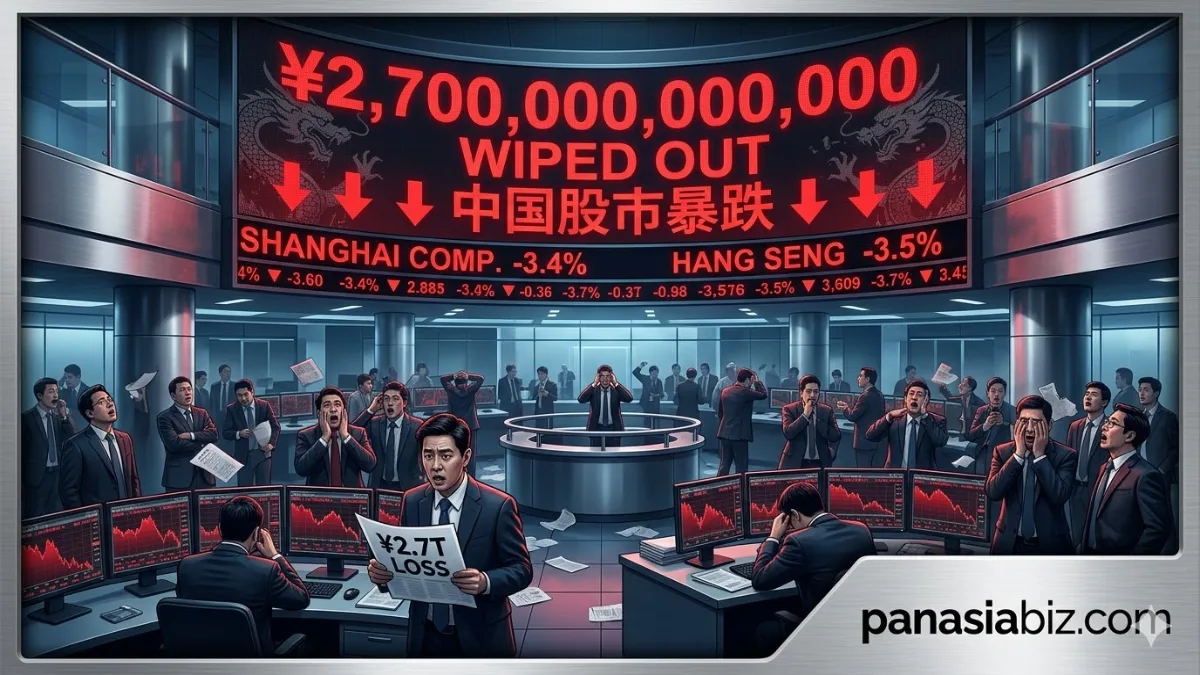 ¥2.7 Trillion Vanishes: China Stocks Crash as Iran War Fears Explode!
 Oil Prices To Skyrocket in 2026 Amid Supply Shocks, Demand Surge
 US Pentagon Report: China Lists Arunachal Pradesh as ‘Core Interest’ Alongside Taiwan
 China Real Estate Sector Shaken by Vanke’s Bond Collapse
 Nepal’s Banknotes Now Printed in China, Ending India’s Long Role
 China Dominates Global Patent Race with Record Filings in 2024
 China’s Sixth-Gen Stealth Fighters J-36 and J-XDS Spotted at Secret Base