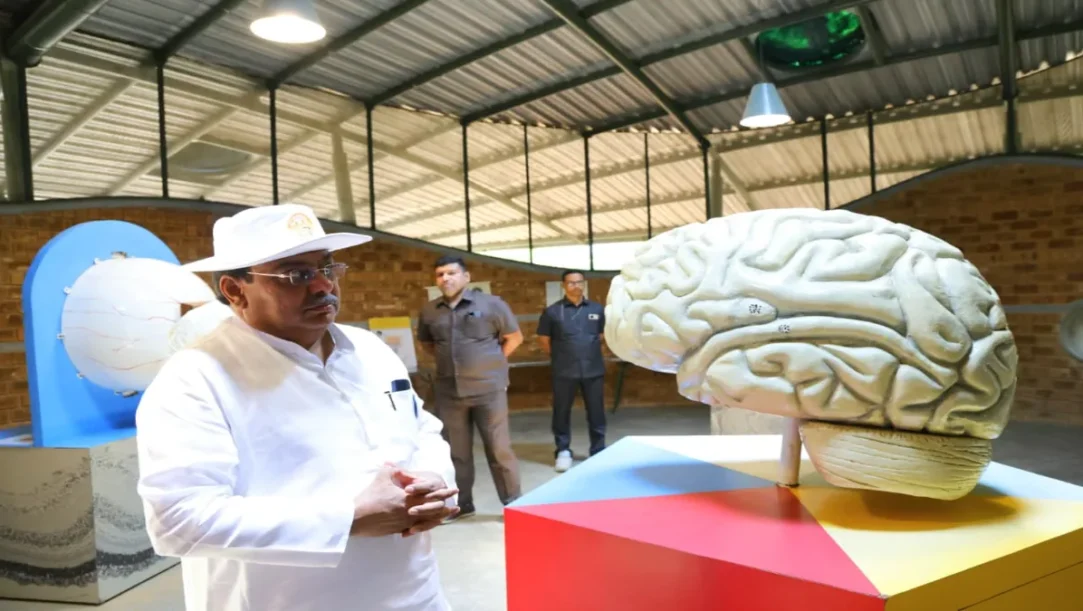
On April 25, 2026, Karnataka Minister M.B. Patil tweeted about his visit to the Agastya Foundation Center in Kuppam. He described the experience as “a journey into another world of science.”
We saw firsthand how the center transforms complex scientific ideas into simple, hands‑on learning modules. Children can grasp tough concepts easily through interactive exhibits and practical experiments.
Our sources confirmed that the foundation emphasizes “learning by doing.” Instead of limiting education to textbooks, students engage directly with experiments. “This approach makes science simple and effective,” Patil noted in his post.
ಕುಪ್ಪಂ: ಅಗಸ್ತ್ಯ ಫೌಂಡೇಶನ್ ಕೇಂದ್ರ ; ಒಂದು ಅದ್ಭುತ ವಿಜ್ಞಾನ ಲೋಕ!
ಕುಪ್ಪಂನ ಅಗಸ್ತ್ಯ ಫೌಂಡೇಶನ್ ಕೇಂದ್ರಕ್ಕೆ ಭೇಟಿ ನೀಡಿದ್ದು, ನಿಜಕ್ಕೂ ಮತ್ತೊಂದು ವಿಸ್ಮಯ ಲೋಕಕ್ಕೆ ಪಯಣಿಸಿದ ಅನುಭವ ನೀಡಿತು.
ಇಲ್ಲಿನ ವೈಜ್ಞಾನಿಕ ಪ್ರದರ್ಶಿಕೆಗಳು ಹಾಗೂ ಪ್ರಾಯೋಗಿಕವಾಗಿ ಕಲಿಯಲು ಇರುವ ವಿಪುಲ ಅವಕಾಶಗಳು ವಿಜ್ಞಾನದ ಜಗತ್ತಿನಲ್ಲಿ ವಿಹರಿಸಿದಂತಹ… pic.twitter.com/alOfDZsjgn
— M B Patil (@MBPatil) April 25, 2026
The center’s experiential learning model builds creativity, curiosity, and problem‑solving skills. “Such initiatives inspire children to explore science with excitement,” one educator told us.
Visitors described the facility as a hub of innovation. From physics demonstrations to biology labs, every corner encourages discovery. A social embed of Patil’s tweet is expected to be widely shared online.
According to local reports, Agastya Foundation has been expanding its reach across rural India. The Kuppam center stands out as a model for experiential education, bridging the gap between theory and practice.
For now, the message is clear. Science is not just about reading — it’s about experiencing. And Kuppam’s Agastya Foundation is proving that hands‑on learning can spark a new generation of innovators.