
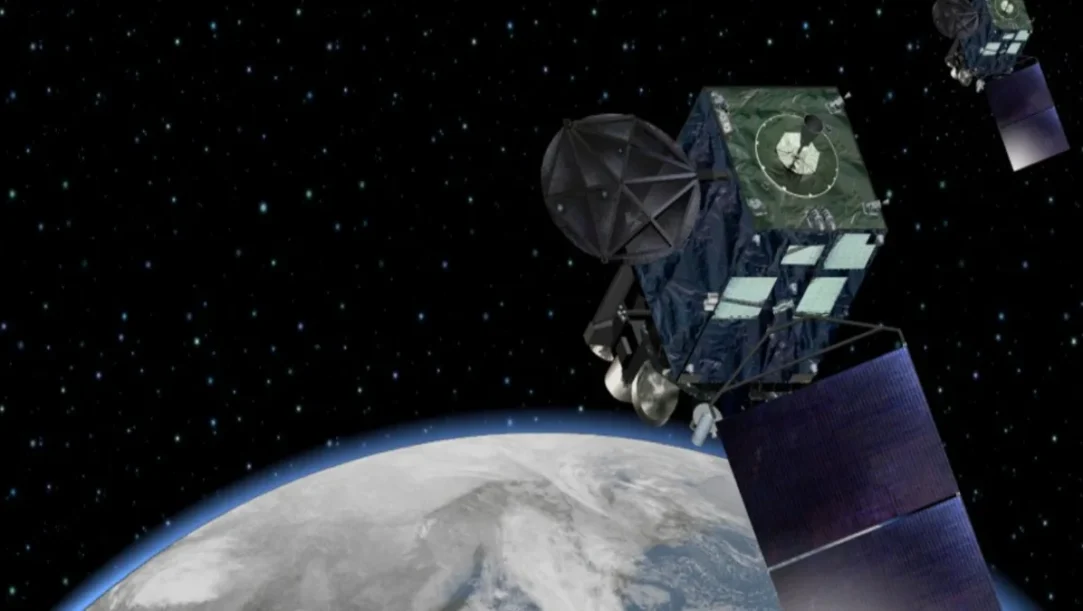
Tracking typhoons requires split-second accuracy. “We rely on these 10-minute full-disk updates to save lives,” a regional weather director noted during a recent climate summit.
HimawariCast acts as the digital backbone for 34 separate institutions. We saw the live feed in action, and the resolution is sharp enough to pinpoint specific storm eyewalls.
Operationally, Himawari-9 remains the heavy lifter. JMA switched its primary duties late last year to ensure the newest sensors stay focused on the Western Pacific.
Target Area observations provide a focused look every 2.5 minutes. As of April 1, 2026, records show over 330 specific requests for these high-speed scans to monitor volcanoes and storms.
Typhoon Sinlaku provided a rare test of this tech earlier this month. Scientists used the satellite’s infrared bands to guide the EarthCARE mission directly through the storm’s eye on April 13.
🌪️Tracking typhoons faster and more accurately—Japan’s Himawari satellites help make it possible. Since 1977, the Japan Meteorological Agency has shared observation data with about 30 Asia-Pacific countries. Via HimawariCast 🛰️, 34 institutions receive it in real time. pic.twitter.com/6Q58pVHb2b
— japan (@japan) April 27, 2026
Precision matters when millions of people live in the path of a surge. Advanced Himawari Imagers capture 16 different spectral bands to peel back the layers of thick cloud cover.
Social media frequently features these breathtaking time-lapse videos of Earth. You should check the embedded tweet below to see a swirling typhoon captured from 35,000 kilometers above.
Development on the next-gen Himawari-10 is already moving at light speed. “This new model will carry a hyperspectral sounder, a first for our geostationary fleet,” a Mitsubishi Electric representative confirmed.
Japan has shared this vital data since 1977. Most nations could never afford their own space program, but they survive because Japan keeps the signal open.
According to the JMA Meteorological Satellite Center, the system remains fully functional despite increased solar activity.
Related posts:
 $2 Million Passage Fee in Yuan? Japan’s Tanker Transit Raises Questions
 Students at Nagaoka KOSEN in Japan Blend Engineering and Entrepreneurship
 Inuyama Festival: 13 Glowing Floats Light Up Japan’s Cherry Blossom Nights
 Only 100 Left? The Race to Save Japan’s Stunning Jungle Cats Before They Vanish!
 China’s Sixth-Gen Stealth Fighters J-36 and J-XDS Spotted at Secret Base
 Dinosaur Mummy Was Actually a Clay Mask—66-Million-Year Secret Uncovered!