

Trump left zero room for doubt. “I call the shots. I call all the shots. He doesn’t call the shots,” Trump said, referring to Netanyahu. Crypto traders read that as a peace deal moving closer — fast.
We saw the market react in real time. Bitcoin climbed sharply the moment headlines from that FT interview sharply started circulating on X and trading desks.
The rally didn’t hold. Bitcoin slipped back to around $63,000 as geopolitical noise returned. Israel struck sites in south Beirut tied to Hezbollah — Iran’s proxy group in Lebanon — killing two people and injuring at least 20, according to BeInCrypto. Iran’s Revolutionary Guard fired back with what it called “warning strikes.”
South Korea’s KOSPI index sank 6.8%, getting hammered by a mix of geopolitical risk and tech-sector selling pressure. Samsung Electronics and SK Hynix both took heavy losses. Asian markets broadly moved lower as risk appetite dried up.
Polymarket traders, meanwhile, kept their bets warm. According to Bitcoin News, the prediction market platform recorded over $154 million in total volume on U.S.-Iran peace deal contracts. The December 31, 2026 outcome carries 91% odds — meaning most traders believe a deal lands before year-end, just not within weeks.
Bitcoin is still roughly $20,000 below its mid-May peak of $82,000. Rising Fed rate expectations and Middle East tensions have driven almost the entire pullback, BeInCrypto noted.
Sunday’s 5% spike felt different to traders. Trump’s language wasn’t a rumor or ceasefire whisper — it was a direct presidential claim of authority over the deal’s outcome. Whether Bitcoin can reclaim $70,000 now depends almost entirely on whether Washington and Tehran close that gap.
Related posts:
 Bitcoin (BTC) Price Crashes Below $60K – Watch Price Chart
 ¥2.7 Trillion Vanishes: China Stocks Crash as Iran War Fears Explode!
 ‘Silver Meltdown!’ MCX Prices Crash by ₹26,000 as Investors Panic Over US-Iran Peace Talks
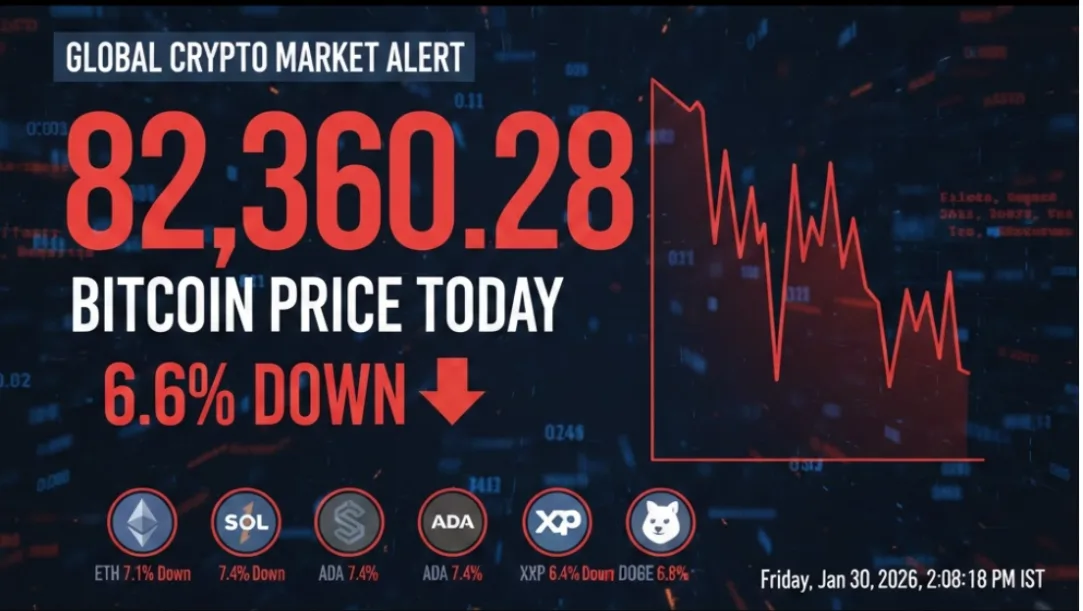 Bitcoin Crashes 6.6% to $82,360.28 as $1.7 Billion Wiped Out Instantly!
 US-India Trade Resilience Tested: Trump Hits Iran Partners with 25% Tariff Amid New Delhi Talks
 Crypto Bloodbath: Bitcoin Crashes to $88,522, $1 Trillion Wiped Out
Bitcoin Crashes to $94K as $1B Floods Exchanges Before US-China Deal
Crypto Bloodbath: Bitcoin Crashes to $88,522, $1 Trillion Wiped Out
Bitcoin Crashes to $94K as $1B Floods Exchanges Before US-China Deal
 Bitcoin Dives 10%: Crypto Market Crashes After Trump’s 100% China Tariff