
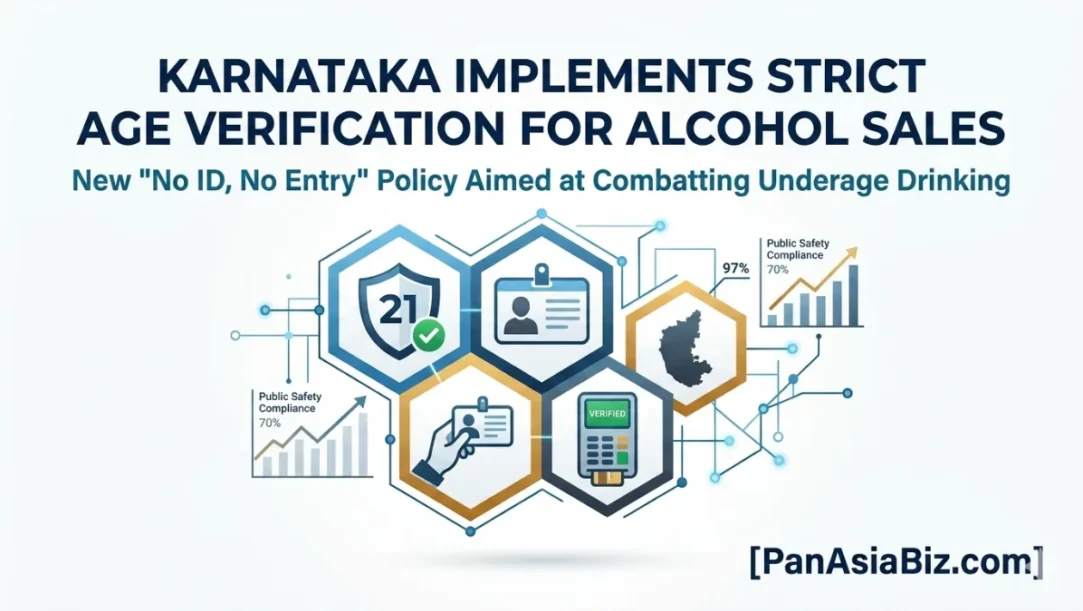
The new Karnataka government, led by CM DK Shivakumar, has mandated strict age-verification protocols for all liquor-serving establishments in the state, including pubs, bars, breweries, and clubs.
Home Minister Priyank Kharge confirmed that the legal drinking age in the state remains 21 years and announced a “zero-tolerance” policy against establishments that permit underage entry or alcohol consumption.
Why the Crackdown?
The directive follows alarming findings from a study involving 4,093 students across Bengaluru, which revealed that one in three adolescents is at risk of health issues linked to alcohol or tobacco. Key statistics from the research include:
High Prevalence: 33% of surveyed young adults reported consuming alcohol, while nearly 18% were addicted to tobacco—figures significantly higher than national and state averages.
Early Initiation: The median age for starting alcohol consumption was found to be 17 years, with some respondents reporting initiation as early as eight years old.
In Karnataka, the legal age for drinking and purchasing liquor is 21 years.
Serving, selling or permitting alcohol consumption by anyone below 21 is illegal and will invite strict action against licensed establishments.
The recent notification is aimed at preventing underage…
— Priyank Kharge / ಪ್ರಿಯಾಂಕ್ ಖರ್ಗೆ (@PriyankKharge) June 13, 2026
New Operational Guidelines
- Accountability: License holders, owners, and managers will be held directly responsible for any violations on their premises.
- Surveillance: Establishments must ensure that entrance CCTV systems are fully functional and footage is preserved for a specified period to assist with police investigations.
- Operational Concerns: While industry stakeholders have welcomed the intent, many have raised questions about practical implementation, including how to identify forged digital IDs and the logistics of verifying hundreds of patrons during peak hours.
The Home Minister has emphasized that this is not merely a licensing issue but a critical public health and youth-safety priority.
Police have been instructed to coordinate with parents, educational institutions, and community groups to ensure broad-based compliance and prevention.
Related posts:
 Karnataka Says No Cauvery Water to Spare for Tamil Nadu, Pushes Mekedatu as Permanent Fix
 How to Apply for Karnataka’s Dr. B.R. Ambedkar International Scholarship 2026 to Study Abroad
 Karnataka Minister MB Patil Inaugurates Begum Talab Water Park in Vijayapura
 Karnataka Congress Government Grants ₹14.46 Crore to 73 Kalyana Karnataka Startups
 Ramachandra Rao Leaked Sex Videos: Karnataka DGP Suspended After MMS Go Viral
 Karnataka Unveils Specialized Policy to Transform 300km Coastline into Tourism Hub