
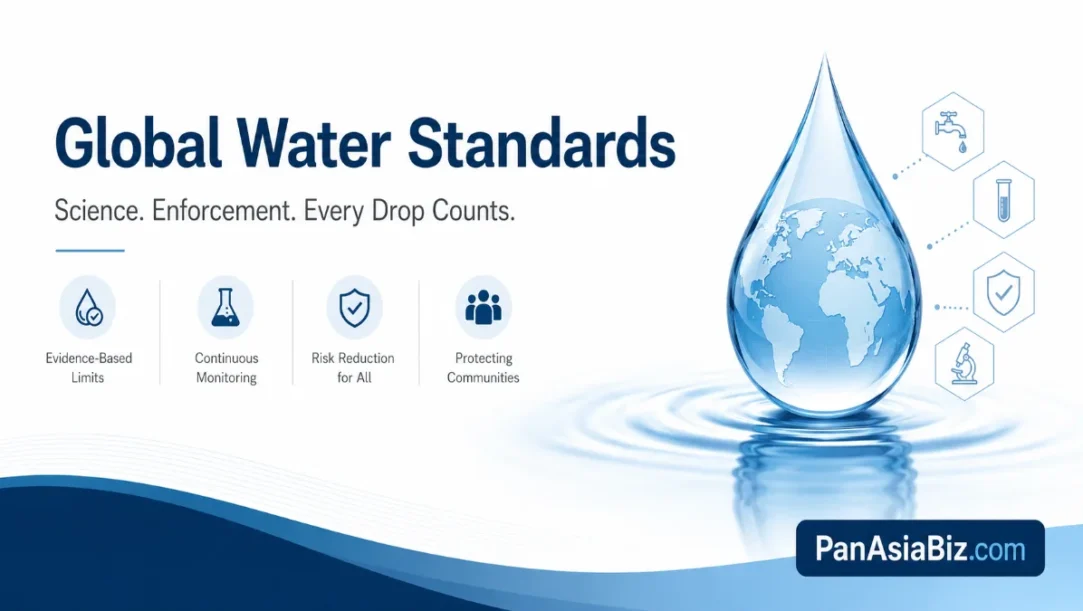
Behind every water quality standard lies a corpse. Not literally, but epidemiologically. When the World Health Organization sets a limit for arsenic at 10 micrograms per litre, that number comes from statistical models of bladder cancer deaths.
When the EU demands near‑zero lead, it comes from IQ loss measured in thousands of children. Global water treatment rules are not polite suggestions. They are thresholds drawn from human suffering. The hidden truth is that every government allows a tiny amount of poison in your tap. The question is how tiny. And that answer changes every decade as science gets sharper. Today’s safe limit was yesterday’s scandal. Tomorrow’s limit will be stricter still.
The oldest rule is about shit. No polite way to say it. Fecal contamination kills more people than war. The global standard is zero E. coli per 100 millilitres. Achieve that, and you stop cholera, typhoid, and dysentery. Chlorine does the job cheaply. But chlorine has a dark side. It reacts with dead plants in the water to form trihalomethanes.
These molecules cause bladder cancer after twenty or thirty years of drinking. So regulators face a bloody calculation. Do you accept a few extra cancer cases to prevent a thousand diarrhea deaths? Yes, always. Pathogens kill fast. Cancers kill slow. The current WHO rule accepts one additional cancer per hundred thousand people from disinfection by‑products. That is the hidden price of chlorinated water. Most people never know they pay it.
Lead rules changed because of children. In the 1970s, the WHO thought 50 micrograms per litre was fine. Then studies showed that low lead exposure reduces IQ by two to three points. No safe threshold exists.
The limit dropped to 10. Then the EU dropped to 5. Now regulators whisper about zero. But zero is impossible because lead pipes still serve millions of homes. The actual rule is corrosion control. Add orthophosphate to water, and a mineral crust forms inside pipes. Lead cannot leach through. But if the treatment plant fails for one week, the crust dissolves. Flint happened exactly that way. The rule was not the problem. Enforcement was. Global water safety lives or dies on daily monitoring, not annual reports.
Arsenic rules are the saddest chapter. Bangladesh dug ten million tube wells to stop diarrhea from surface water. Instead, they tapped groundwater with natural arsenic. Twenty million people now drink a slow poison. The WHO limit of 10 micrograms per litre is technically correct but practically useless in rural villages.
Arsenic removal needs reverse osmosis or iron coagulation filters. Each costs money and skilled operators. Most villages have neither. So the global rule exists in textbooks, not in stomachs. People develop skin lesions, then diabetes, then lung cancer. The rule did not fail. The infrastructure did. This is the central tragedy of water regulation. Writing a number is easy. Delivering it is hard.
Viruses do not care about your rules. Norovirus passes through standard chlorine doses because it hides inside particles. The new global standard demands 99.99 percent viral reduction. That means four logs. One log is ninety percent. Four logs is ten thousand times fewer viruses. Achieving this requires either ultraviolet light or ozone as a second barrier.
The EU now mandates virus risk assessments for all public water systems. The US EPA is following slowly. Why the delay? Cost. UV lamps and ozone generators are expensive. Small towns cannot afford them. So the global community faces another bloody trade‑off. Accept some viral gastroenteritis every year, or force poor communities to raise water bills. There is no perfect answer. Only less bad ones.
Fluoride rules are a political wound. At 0.7 milligrams per litre, fluoride cuts cavities by twenty‑five percent. At 1.5 milligrams, it permanently stains children’s teeth. The WHO says fluoridate carefully. Most European countries say no thanks.
They prefer salt fluoridation or topical pastes. America fluoridates two‑thirds of its water. Both sides claim science supports them. The real global rule is transparency. Tell people what is in their water. Let them choose. But choice requires trust. And trust requires enforcement.
Enforcement remains the world’s broken leg. Rich countries test hourly. Poor countries test monthly, if at all. Two billion people drink water that fails global standards. Half a million children die annually from that failure. The numbers are abstract.
The deaths are not. Companies like AQUAANALYTIC, build engineering solutions for water treatment that turn paper rules into measurable outcomes. Their sensors and controllers help treatment plants stay within WHO limits every hour of every day. No guessing.
No excuses. Global water rules are only as good as the last test result. And the last test result is only as good as the engineer who ran it. Safe water is not a gift of nature. It is a triumph of enforced standards, paid for in attention, funded by conscience, and delivered by people who refuse to let the next corpse be yours.
Related posts:
 Karnataka’s Kalaburagi Rotti Enters Global Markets
 Abu Dhabi to Host ‘Make It In The Emirates’ Forum 2026: A Global Hub for Industrial Innovation
 Spain To Enforce Strict Crypto Rules In 2026: What Every Investor Needs To Know
 Vietnam May Change Casino Entry Rules for Local People
 Global Unemployment Shock: South Africa at 31.9% While Asia Holds Steady
 US Ends Automatic Work Permits: Indian Students and H-4 Spouses at Risk
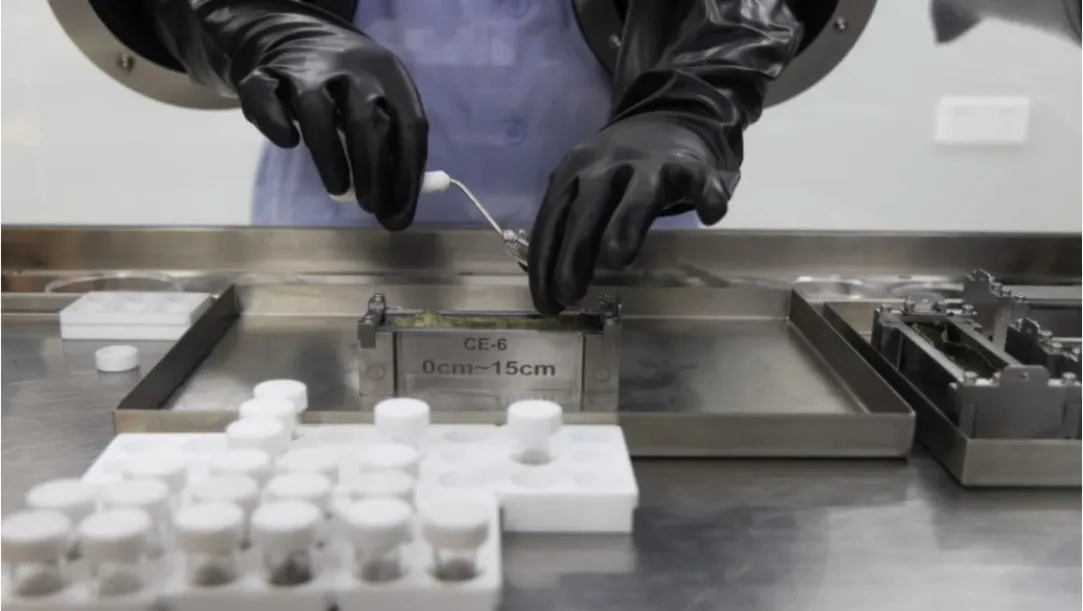 Chang’e-6 Meteorite Discovery Sheds Light on Moon’s Water Origins and Solar System Dynamics
 Scientists Spot Ancient ‘Heavy Water’ in Exoplanet Disk—A Cosmic First!